REVIEW · AUSTIN
Austin and Hill Country Panoramic Sightseeing Tour
Book on Viator →Operated by AO Tours Austin · Bookable on Viator
Austin hits different once you see it from the road. This guided Mercedes-Benz sprinter tour layers city history, hill-country views, and photo stops with English/Spanish headsets. You’ll pass downtown landmarks like the Driskill and Lady Bird Lake, then swing out toward Mount Bonnell and beyond.
I especially liked two things: the comfortable, air-conditioned ride and the easy way the narration tells you what you’re looking at while you’re moving. Guides like Doug, Chad, and Jaye are repeatedly praised for humor and local insight, which makes the drive feel like a guided conversation, not a lecture.
One consideration: not every seat guarantees the same sightlines. The tour also has several quick stops, so if a specific stop is a must for you, plan to treat this as a highlights sampler, not a slow, linger-long experience.
In This Review
- Key things I’d watch for before you go
- Why This Austin and Hill Country Tour Is a Smart First-Day Move
- Price and What You Actually Get for $73
- Getting Started at 103 E 5th St. and What the Ride Is Like
- Zilker Park and Barton Springs: Austin’s Outdoor Core
- Congress Avenue Bridge Bats and Lady Bird Lake’s Downtown Loop
- Downtown Anchors: 2nd Street, City Views, and Quick Stops That Pay Off
- Mount Bonnell and Lake Austin Views: The Big Payoff Scenic Moment
- Long Center and a Quick Taste of Performing Arts Austin
- Wild Basin Wilderness Preserve: Hill Country Nature Without the Long Drive
- Percy V. Pennybacker Jr. Bridge and Loop 360 Scenic Driving
- UMLAUF Sculpture Garden & Museum: Art in the Open
- Barton Creek Greenbelt and Mayfield Park: Two Ways to Do Rest in Austin
- Historic Estates and the Driskill Area: Laguna Gloria and Old Austin Charm
- Sixth Street Historic District: Old Trade District to Modern Austin
- Austin Central Library: A Modern Stop That Still Feels Local
- A Few Practical Tips to Make This Tour Feel Worth It
- Should You Book This Austin and Hill Country Sightseeing Tour?
- FAQ
- How long is the Austin and Hill Country Panoramic Sightseeing Tour?
- What does it cost?
- Where do I meet for the tour?
- What kind of vehicle is used?
- Are the tour guides available in more than one language?
- Do I need tickets in advance?
- What is included in the price?
- What’s not included?
- How many people are in the group?
- Is this tour child-friendly?
- When might the tour not run?
Key things I’d watch for before you go
- Open-air style touring with headsets (English and Spanish options) so you’re not straining to hear details
- Small group size (max 14 travelers), which generally keeps the tour feeling organized and personal
- A “photo stop” rhythm that favors short scenic moments at iconic places
- Bats under the Congress Avenue Bridge—a genuinely Austin-only spectacle you can’t replicate on your own
- Hill Country viewpoints like Mount Bonnell and scenic highway bridges
- Seating can affect the view, so if panoramic sightlines matter most, sit accordingly when you board
Why This Austin and Hill Country Tour Is a Smart First-Day Move
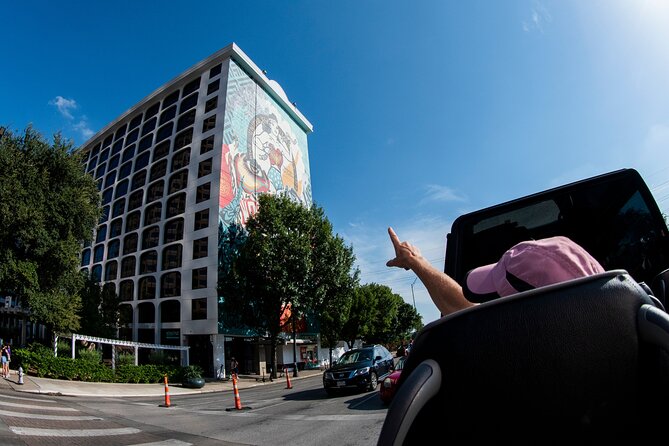
Austin is one of those cities where the neighborhoods feel like separate stories. This tour helps you stitch those stories together fast—downtown energy, lake views, and Hill Country scenery—without needing a car or juggling rideshare timing.
At 2 hours 30 minutes, it’s long enough to cover real ground and short enough that you’re not stuck on the same loop all day. And since it runs from the Austin Visitors Center area (103 E 5th St.) and returns there, it’s simple to place into your schedule. If you’re staying only a couple days, this is the kind of tour that helps you pick better self-guided plans afterward.
The overall value is also strong for what you get: the tour includes transport in a luxury air-conditioned vehicle, headsets/earbuds, and access to key sightseeing stops with free admissions listed for several locations.
You can also read our reviews of more tours and experiences in Austin.

Price and What You Actually Get for $73
At $73 per person, you’re paying mostly for two things: guided transportation that saves you time and guided context that makes the stops make sense.
Yes, you’re not getting a sit-down meal here—food and beverage aren’t included, and you can bring your own. But that’s also part of the value. You can grab lunch on your own schedule, instead of getting locked into a set restaurant stop.
You do get a few “small perks” that add up to comfort and convenience, too:
- Earbuds provided (and you can use your own)
- A Signature PinkTag partner souvenir luggage tag
- A mobile ticket for easier check-in
- Narration via bilingual headsets (English and Spanish options)
If your goal is to see a lot of Austin highlights quickly, $73 feels reasonable. If your goal is slow travel, deep museum time, or a long walking tour, you might find this best paired with later, more focused plans.
Getting Started at 103 E 5th St. and What the Ride Is Like
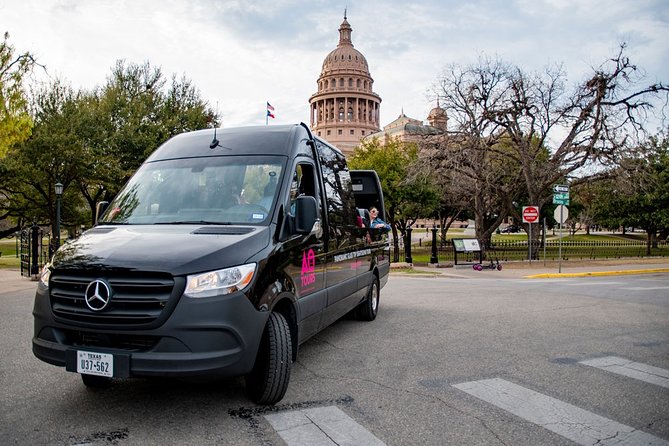
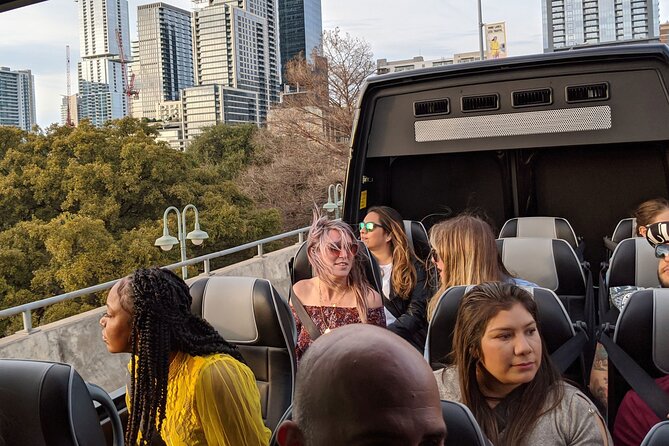
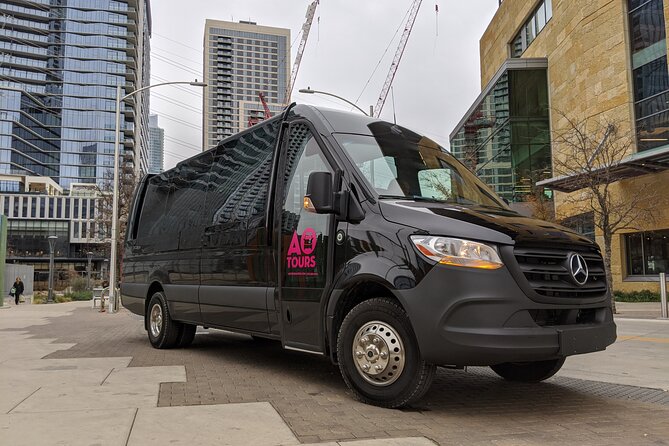
The tour starts and ends near 103 E 5th St., which is helpful because you won’t waste the first hour figuring out where to meet. You’ll ride in a roomy Mercedes-Benz sprinter van with headsets that let you follow in either English or Spanish.
One detail worth noting: the vehicle is described as an open-air style setup. That matters in Austin. When the weather is good, you’ll feel the shift in temperature as you move between downtown and the hills. When it’s hot, the air-conditioning is a relief.
Group size is kept small—up to 14 travelers—so you’re less likely to feel shuffled along. The ride also includes guidance, but with enough room to enjoy the views and take photos during photo stops.
And if you’re sensitive to uneven ground: the tour notes that stops can include uneven surfaces, so comfortable shoes help.
Zilker Park and Barton Springs: Austin’s Outdoor Core
Your first major scenic base is Zilker Metropolitan Park. It’s big—351 acres—and that scale shows you how much of Austin life happens outdoors. Even if you’re only seeing it from the tour, you get a sense of why Austinites treat parks like living rooms.
From there you’ll move to the area around Barton Springs. The stop info ties directly to Barton Springs Pool: a three-acre pool filled by underground springs, typically 68–70 degrees year-round. That temperature detail isn’t just trivia. It’s a clue that this is a real local institution, not a seasonal splash pad.
What I like about this stop pattern is that it gives you two Austin flavors fast:
- a big-city park vibe at Zilker
- a legendary swimming destination at Barton Springs
A potential drawback: this is a quick hit. If your dream is to spend an hour floating in warm-to-cool water, you’ll want a separate visit later. This is more about orientation and first impressions.
Congress Avenue Bridge Bats and Lady Bird Lake’s Downtown Loop

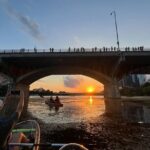
Then comes one of the most Austin moments on the list: Congress Avenue Bridge and its famous urban bat colony. The tour info states there can be 750,000 to 1.5 million Mexican free-tailed bats underneath during summer. That’s the kind of fact that changes how you see a bridge—suddenly it’s not just infrastructure, it’s wildlife architecture.
Even if you’re not there at peak bat-viewing time, learning that the bats live under the road deck in gaps between concrete structures gives you a real sense of how Austin works with nature nearby.
From there, the route threads through major downtown areas around Lady Bird Lake:
- 2nd Street District, known for its mix of local retail, restaurants, dining, and live music
- Auditorium Shores, on the south shore of Lady Bird Lake, with views back toward the downtown skyline
At Auditorium Shores, you’ll also see a memorial statue for Stevie Ray Vaughan, adding a music-history layer to your river walk imagery. The Town Lake Hike and Bike Trail also runs nearby, which is useful context if you want to come back later and explore at your own pace.



Downtown Anchors: 2nd Street, City Views, and Quick Stops That Pay Off

Downtown can swallow time fast when you don’t have a plan. This tour helps because it hits key “anchors” without forcing you into long waits.
In particular:
- 2nd Street District is a good orientation stop. You’ll get a sense of where to wander for food and music later.
- Moody Theater appears in the area described around the 2nd Street/Downtown zone, and the tour connects you to the idea of Austin as a live-music city, not a weekend gimmick.
- City Hall and the shores of Lady Bird Lake show you the civic and scenic sides of downtown at once.
One caution: photo moments are quick. Bring your phone charger mindset if you’re trying to capture skyline shots in multiple directions. The good news is the itinerary is designed around these brief “stop and shoot” windows.
Mount Bonnell and Lake Austin Views: The Big Payoff Scenic Moment

After downtown, the tour shifts into view territory with Mount Bonnell (also referred to as Covert Park). It’s a popular viewpoint dating back to the 1850s, and the main job here is simple: give you a panoramic look at Austin, the Lake Austin area, and surrounding hills.
This stop is the kind of moment that makes the entire tour feel worth it. Even if you don’t know much about Austin’s geography, you’ll start recognizing where everything fits together—downtown in relation to the river and hills.
Time at Mount Bonnell is brief (listed at 15 minutes), so you’ll want to treat it like a short window, not an extended hike. If you want a longer viewpoint session, you can always plan a separate trip based on what you spot from here.
Long Center and a Quick Taste of Performing Arts Austin
The tour also includes the Joe R. and Teresa Lozano Long Center for the Performing Arts along Lady Bird Lake. Even if you’re not seeing a show, this stop is useful because it gives shape to Austin’s arts identity. It’s also a reminder that the riverfront is not just a pretty backdrop—it’s part of the city’s calendar.
The itinerary description includes another short theatre-related stop as well, described as producing live theatre for audiences of all ages. The exact attraction name isn’t specified in the stop text you provided, but the point is clear: this tour gives you a quick glance at Austin’s performing arts culture between scenic drives.
If you’re the kind of traveler who likes checking what a city is proud of, these arts stops help you understand Austin beyond barbecue and murals.
Wild Basin Wilderness Preserve: Hill Country Nature Without the Long Drive
Next comes one of the best “nature and time balance” choices: Wild Basin Wilderness Preserve. The tour describes it as 227 acres of native Texas Hill Country habitat in Westlake Hills and notes 2.5 miles of hiking trails.
Here’s how to think about it: this is nature access, packaged into a guided timeline. You won’t get a full-day hike, but you will get a feel for the Hill Country texture—less city, more scrubby land, and a sense of Austin stretching outward into real wilderness space.
One consideration: if you hate walking on uneven ground, you should be strategic about how much time you spend on the trails during a stop. The tour notes uneven surfaces at stops generally, so wear supportive shoes and pace yourself.
Percy V. Pennybacker Jr. Bridge and Loop 360 Scenic Driving
No matter how many photos you scroll beforehand, a scenic bridge can reset your mental map of a place. The tour includes the Percy V. Pennybacker Jr. Bridge, connecting sections of Loop 360, sometimes described as the scenic road called the Capital of Texas Highway.
The key value here is the drive experience. You don’t just see a bridge; you see the bridge’s role as a scenic connector, with rolling hills on either side.
If you’re someone who likes “road trip viewpoints” more than museum interiors, this is a strong section of the tour.
UMLAUF Sculpture Garden & Museum: Art in the Open
You’ll also stop at the UMLAUF Sculpture Garden & Museum, described as home to the largest collection of American sculptor Charles Umlauf’s work.
This stop is a good change of pace from purely skyline or park views. It’s also a reminder that Austin’s creative energy shows up in outdoor formats, not just galleries.
Because the tour keeps a highlights pace, you likely won’t get a full museum visit here. But even a short look is enough to spark ideas for a later, deeper museum day if that’s your style.
Barton Creek Greenbelt and Mayfield Park: Two Ways to Do Rest in Austin
The itinerary includes the Barton Creek Greenbelt, described as a go-to spot for outdoor enthusiasts, with activities ranging from hiking and biking to rock climbing and even swimming. The listing also mentions that you can spend a day along Barton Creek—hammocks, sunbathing on boulders, and access to about 12 miles of trails via multiple entry points.
Again, you’re not getting a full hike here. You’re getting orientation: you’ll learn where people go when they want Austin outdoors, and that makes it easier to plan a return trip later.
Then there’s Mayfield Park and Preserve, described as an island of calm in Austin and listed on the National Register of Historic Places. It was presented to the city in 1971, with a clear mission: a park for all Austinites to enjoy.
Why this matters: it adds balance. After viewpoints and downtown energy, you get at least a whiff of “slower Austin,” the kind that locals build into their weekends.
Historic Estates and the Driskill Area: Laguna Gloria and Old Austin Charm
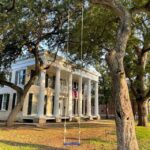
The itinerary includes Laguna Gloria Art Museum, described as a Mediterranean-style villa built in 1916 for Henry H. and Clara Driscoll Sevier, later associated with Texas Fine Arts efforts, and now owned/used as the art museum site. This is a strong “architecture and story” stop, because you’re not only looking at a building—you’re seeing how Austin’s cultural priorities formed over time.
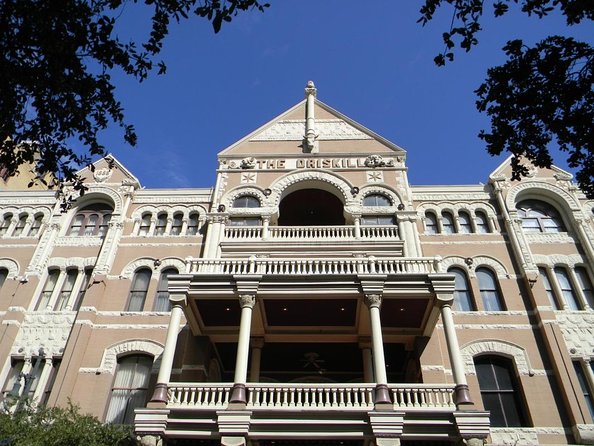
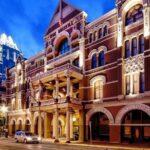
Later, you’ll reach the famous Driskill. Built in 1886 as a showplace for a cattle baron, it remains a landmark of Texas hospitality. The stop time is brief (listed at 15 minutes), but the focus is clear: the opulent lobby, marble floors, stained-glass dome, corridors with museum-quality artwork, and the grand mezzanine for a glimpse into the hotel’s past.
If you care about historic interiors, this is one of the best “short stop” experiences because it feels like stepping into a different era. If you don’t, it’s still worth it as a contrast to the parks and bridges you’ll have seen earlier.
Sixth Street Historic District: Old Trade District to Modern Austin
Another stop threads you through the Sixth Street Historic District, roughly described as the nine-block area of East Sixth Street between Lavaca Street and Interstate 35. It’s listed on the National Register of Historic Places and is tied to a late-1800s trade and commercial district.
The tour description points out the predominant two- or three-story masonry Victorian commercial architecture, with a few named exceptions including the Driskill Hotel and other notable buildings.
This part helps you see the layer-cake Austin effect: modern nightlife sits on top of older commercial fabric. If you like street-level history, you’ll appreciate this quick orientation.
Austin Central Library: A Modern Stop That Still Feels Local
The tour includes the Austin Public Library (Central Library). The building is described as designed by Lake Flato Architects and Shepley Bulfinch. The listing also notes the library has features like a living rooftop garden, reading porches, indoor and outdoor event spaces, and a café run by ELM Restaurant Group.
This is one of the stops that can surprise people. It’s not a typical tourist “must,” but it’s a useful pause point: it’s a chance to cool down, use facilities, and see a modern Austin landmark that reflects design priorities like energy efficiency and gathering spaces.
If a library stop sounds too slow for you, keep in mind it’s built into a short timeframe and functions as both architecture and a rest break.
A Few Practical Tips to Make This Tour Feel Worth It
1) Arrive ready for short stops. This is a touring-and-photo rhythm. Bring water and a phone charge plan, especially if your day is sunny.
2) Pick your seat with the view in mind. Some seating may not provide the same panoramic sightlines. If you’re prioritizing views, board early and aim for the best angle you can.
3) Use the headsets. The bilingual narration is part of the value—this tour makes each location easier to understand because you learn what you’re looking at while you’re there.
4) Bring your own food if you need it. Food and beverage aren’t included. You can snack on your own schedule and avoid paying convenience prices at stop locations you didn’t plan for.
5) Plan your clothing for weather and walking. It’s a mix of scenic lookouts and short outdoor segments. Even with headsets and comfort in the vehicle, you’ll still stand and walk at stops.
Should You Book This Austin and Hill Country Sightseeing Tour?
Yes, if you want an efficient, guided way to get your bearings in Austin and you like mixing city highlights with Hill Country viewpoints. This tour is especially solid for a first visit because it packages downtown icons, river scenery, and scenic hill driving into one 2.5-hour outing.
Skip it or rethink it if you’re chasing long stays in one place, guaranteed panoramic seating from every row, or a tour style where every stop is a deep dive. Also, if you strongly dislike any quick detour stops, remember the itinerary can include busy, brief photo/comfort stops rather than one-spot-only experiences.
If you’re deciding between doing nothing and booking one “orientation” activity, this is the kind of tour that helps you spend the rest of your time in Austin smarter.
FAQ
How long is the Austin and Hill Country Panoramic Sightseeing Tour?
It’s about 2 hours 30 minutes.
What does it cost?
The price is $73.00 per person.
Where do I meet for the tour?
The tour starts at 103 E 5th St., Austin, TX 78701 and ends back at the meeting point.
What kind of vehicle is used?
You ride in a Mercedes-Benz sprinter van that’s described as open-air, and it’s air-conditioned.
Are the tour guides available in more than one language?
Yes. The vehicle includes headsets with English and Spanish language options.
Do I need tickets in advance?
You get a mobile ticket. Confirmation is received within 48 hours of booking, subject to availability.
What is included in the price?
Included items are the tour in a luxury air-conditioned vehicle, earbuds, coverage of iconic Austin sites, plus GST and a Signature PinkTag Partner Souvenir luggage tag.
What’s not included?
Food and beverage aren’t included (you can bring your own). Parking fees are also not included.
How many people are in the group?
The tour has a maximum of 14 travelers.
Is this tour child-friendly?
Most travelers can participate. For infants and young children, a state-required child safety seat may be needed, based on Texas law.
When might the tour not run?
The experience requires good weather. If canceled due to poor weather, you’ll be offered a different date or a full refund. The tour also requires a minimum number of travelers.