
REVIEW · AUSTIN
Austin and Hill Country Sightseeing Tour
Book on Viator →Operated by AO Tours Austin · Bookable on Viator
Austin goes by fast in a cool sprinter. In about 90 minutes, you cover roughly 30 miles and get a fast, guided look at Austin plus Hill Country highlights, from the Texas Capitol to the bat flight on Congress Avenue—without baking in the sun. You ride in an air-conditioned Mercedes-Benz Sprinter van with a local guide calling out what to notice along the way.
I like the way the tour gives you “where am I, and what do I do next” clarity. You’ll see big anchors like Texas Capitol and UT’s Main Campus, then swing through areas around Lady Bird Lake and over to scenic viewpoints tied to Lake Austin. I also like the guide factor—people have mentioned standout guides like Doug, David, and Matthew, with the kind of extra local tips that help you plan the rest of your trip.
The main trade-off is that most stops are drive-by. That means you get the sight and the story, but you’ll have less time for photos than you would on a walking tour or the longer 2.5-hour version with more stops.
In This Review
- Key things that make this tour worth your time
- Why a 90-Minute Sprinter Tour Works for First-Time Austin Plans
- Getting Started at 103 E 5th St and Settling Into a Small Group
- Downtown Austin Hits: 2nd Street District, Willie Nelson Blvd, City Hall, and City Limits
- Congress Avenue and Lady Bird Lake: Bat Bridge Moments and Performing Arts Along the Water
- Parks, Cool-Off Spots, and the Calm-Then-Scenic Rhythm Near Zilker
- Hill Country Style Views: Austin Country Club Glimpse, Pennybacker Bridge, Lake Austin, Bull Creek
- Mount Bonnell and Big Views Without the Planning Headache
- Art, Architecture, and Offbeat Austin Corners You’ll Want to Revisit
- Texas Statehouse Core: French Legation, Congress Avenue, UT, and the Campus-Oriented Story
- What You Really Get for $33: Value, Comfort, and the Limits of Drive-By Tours
- Practical Tips for Photos and Planning Your Next Day in Austin
- Should You Book This Austin and Hill Country Tour?
- FAQ
- How long is the Austin and Hill Country tour?
- What landmarks are included?
- What’s the meeting point?
- What’s included in the ticket price?
- Is food or drink included?
- Is the tour a walking tour?
- How big is the group?
- Is downtown hotel pickup included?
- Do children need a safety seat?
- What’s the cancellation policy?
Key things that make this tour worth your time
A/C comfort in a Sprinter van that keeps the ride pleasant in Texas heat
50+ drive-by points in just 1.5 hours, so you can get your bearings fast
Austin signature sights like Congress Avenue’s Bat Bridge and the Texas Capitol
Local food and music references as you pass places like the Moody Theater and 6th Street
Small group size (max 14) which makes it easier to hear the guide and ask questions
Why a 90-Minute Sprinter Tour Works for First-Time Austin Plans
Austin is spread out, and that’s the whole problem a lot of visitors run into. This tour solves it by doing a tight loop on wheels, so you’re not spending half your day figuring out drives, parking, and timing. In 1 hour 30 minutes, you’re meant to walk away with a mental map of what to revisit later.
The value here is pace with context. You’re not just seeing buildings; you’re getting “what this place means” along the route. That helps if you only have a couple days, or if you want to stop guessing and start prioritizing.
And because it’s in an A/C vehicle, it’s built for real Austin weather—hot, bright, and sometimes stubborn about timing. In a city where the day can go sideways quickly, having an organized plan you can trust is a win.
You can also read our reviews of more tours and experiences in Austin.



Getting Started at 103 E 5th St and Settling Into a Small Group
The tour starts back at 103 E 5th St., Austin, TX 78701, and it ends there too. You’ll be in a group capped at 14 travelers, which keeps the experience from feeling like you’re shouting over everyone else. When a van is that size, you can usually catch the guide’s narration and keep an eye on what’s coming next.
You’ll also move efficiently through traffic because you’re not stuck trying to park near every single stop. That matters in downtown Austin, where the closest option can change every year.
One small practical note: this tour uses a mobile ticket, so have that ready on your phone before you meet. And it’s not a “break from the road” tour with lots of major walking—think more drive-by highlights and stories than getting out for long stretches.
Downtown Austin Hits: 2nd Street District, Willie Nelson Blvd, City Hall, and City Limits
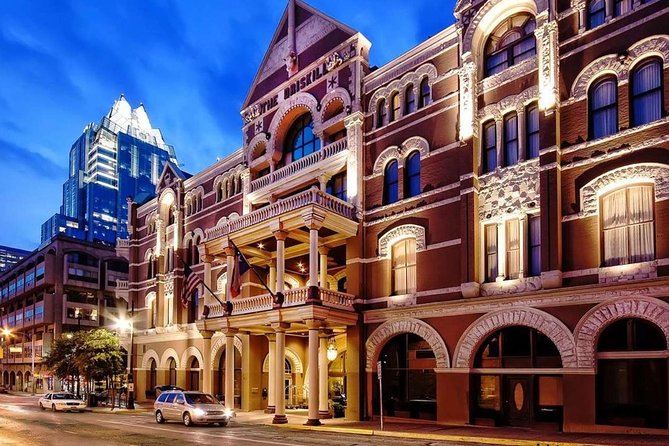
Right at the start, you get placed in the downtown rhythm. The route centers around the 2nd Street District, where the mix of shopping, dining, and entertainment gives you a feel for how Austin moves day to night. It’s a good early stop in the tour because it anchors you to the areas most first-timers want to understand.
Then you pass the Willie Nelson Statue on Willie Nelson Blvd (formerly 2nd St.). Even if you don’t know the full story, it’s one of those Austin landmarks that tells you the city is proud of its music roots.
You’ll also see where Austin City Limits is filmed. That’s a smart add, because it connects the modern music scene to a specific location rather than leaving it as a vague idea. Nearby, you’ll check Austin City Hall, built in 2004, another quick “this is the government center” waypoint that helps you orient once you’re on your own.
A key detail: you’ll mainly be seeing these from the vehicle. If you want the best photos, position yourself so you can shoot without fighting for window angles. And if your van seat faces one side only, try to look for the “coming up” details before you shoot—photos get harder when you wait until the last second.
Congress Avenue and Lady Bird Lake: Bat Bridge Moments and Performing Arts Along the Water
Next up is one of Austin’s signature scenes: the Congress Avenue Bridge, also called the Bat Bridge. From March to September, bats emerge and you’ll see crowds planning their evenings around that moment. Even from the vehicle, the guide’s timing and context usually make this feel less random and more like a true Austin ritual.
After that, you shift into the Lady Bird Lake corridor, where a lot of Austin’s civic and cultural identity shows up. You’ll pass the Joe R. and Teresa Lozano Long Center for the Performing Arts, then the Palmer Events Center next to Butler Park. These aren’t just landmarks to memorize; they show how the city builds big cultural spaces near the water.
There’s also a laid-back side to it: you’ll pass an off-leash dog park along the lake. It’s a reminder that Austin’s “serious” and “relaxed” can sit side-by-side, often within the same view.
The tour also tracks the Colorado River, called Texas’s longest river in the tour info. Hearing that while you’re actually moving along the corridor helps the city’s geography click faster than trying to read it later.
Parks, Cool-Off Spots, and the Calm-Then-Scenic Rhythm Near Zilker
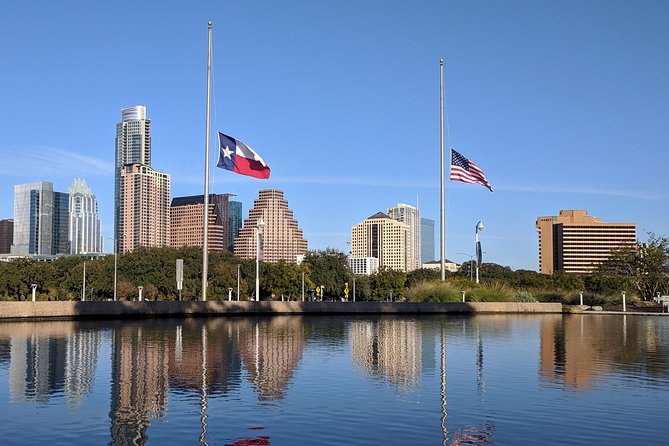
If you’re trying to understand Austin’s outdoor culture, this stretch matters. You’ll pass by Zilker Metropolitan Park, described as Austin’s most-loved park and set on 351 acres. Zilker is where locals head when they want space, events, or just a place to recharge.
The route also references Wild Basin Wilderness Preserve, with native Texas Hill Country habitat and 2.5 miles of hiking trails. Even if you don’t hike during the tour, this helps you understand that Austin’s “Hill Country” edge isn’t far away—you can reach it without leaving the city’s orbit.
You’ll also see more art-related stops in the same general feel-good rhythm, including the Umlauf Sculpture Garden & Museum. That’s a place where the vibe is slower. The tour includes a spring-fed creek that feeds into Lady Bird Lake, and that calm detail is the kind of thing that helps you picture what the area is like outside of rush-hour traffic.
And yes, there’s a summer-cool escape built in: the tour passes by Zilker and the surrounding spots that locals flock to when it’s hot. If you plan to return later, this is one of those segments that makes your follow-up feel targeted.






Hill Country Style Views: Austin Country Club Glimpse, Pennybacker Bridge, Lake Austin, Bull Creek

Now the tour turns more scenic, and it’s a big part of why the price feels reasonable. You’re not just staying downtown; you’re riding toward the viewpoints that make Austin look like a postcard.
You’ll get a glimpse of the Austin Country Club, founded in 1899. It’s a private club, so you’re not going inside, but it’s a visual marker of how Austin has long mixed wealth, outdoor life, and landscape-adjacent living.
Then come the signature roads and bridges. You’ll pass the Percy V. Pennybacker Jr. Bridge across Lake Austin and connect to the Loop 360 route. The guide’s explanation of why the area is known for scenic drives makes this segment easier to appreciate than just seeing a bridge as a bridge.
After that, you’ll see Lake Austin and Bull Creek from the road. These are “look and feel” moments more than “stand and admire” moments. Still, they give you real perspective on the river-lake system that shapes Austin.
Mount Bonnell and Big Views Without the Planning Headache

The tour includes Mount Bonnell, also known as Covert Park. It’s described as a popular tourist destination since the 1850s, with a vista looking out over Austin, Lake Austin, and the surrounding hills.
This is one of the best examples of how the tour helps you reduce guesswork. If you’re deciding what hilltop viewpoint is actually worth your time later, seeing it on the route with context can help you commit with confidence.
The trade-off again: you’re not trekking to a viewpoint with time to linger. But you do get enough orientation to decide if Mount Bonnell should become a planned stop on your own schedule.
Art, Architecture, and Offbeat Austin Corners You’ll Want to Revisit
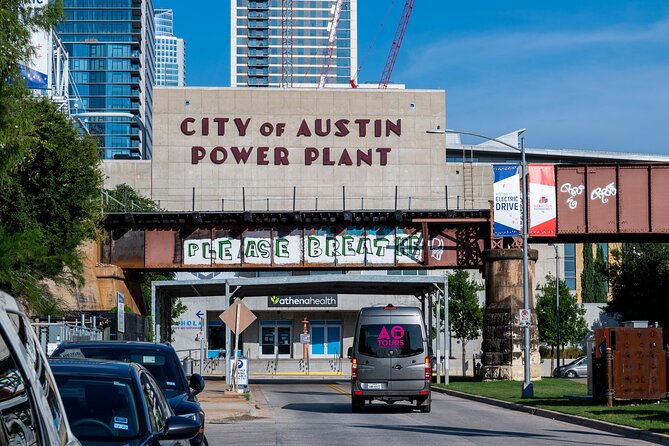
Austin loves variety, and this tour reflects that with a mix of art stops and distinctive structures.
You’ll pass the Austin Modern Art Museum and later again see modern art sites around the route. You’ll also encounter Mayfield Park and Preserve, which the tour describes as an island-like estate and a National Register property. One fun element: the tour warns you to watch for peacocks, which is exactly the kind of detail that makes a drive-by feel memorable.
Another worthwhile stop for context is the Historic Freedmen’s Community, described as the oldest high school west of the Mississippi. That kind of landmark is easy to miss on your own, and it matters because it adds depth beyond the usual headline attractions.
You’ll also pass Seaholm Power Plant and the Austin Public Library—two structures that help you understand Austin’s blend of old infrastructure, modern life, and civic pride. Then the route moves through the Warehouse District, including a noted coffee shop experience in the area and a repeated pass through the district blocks.
These segments are great for planning. If you later want to build an art day or a neighborhood day, this tour gives you the starting grid.
Texas Statehouse Core: French Legation, Congress Avenue, UT, and the Campus-Oriented Story
The tour keeps threading back into the downtown-and-capitol world. You’ll pass Historic Congress Ave, then work through key civic anchors including the Texas Capitol and UT Main Campus.
The inclusion of historic figures’ final resting place is one of those small add-ons that can make the stop area feel more meaningful. It’s also useful if you like to understand what you’re looking at instead of just collecting photos.
You’ll pass LBJ Library as well, plus the governor’s mansion area. And you’ll see major educational buildings and landmarks around the UT region, including UT Stadium and nearby museum-focused stops such as the natural history museum and other arts venues along the route.
You’ll also pass the French Legation and historic towers around town. Those details help you place Austin on a longer timeline, not just as a 2010s music hotspot.
What You Really Get for $33: Value, Comfort, and the Limits of Drive-By Tours
At $33 per person for about 1 hour 30 minutes, the “value” here is mostly the mix: an A/C vehicle, a guide, and a lot of landmarks packed into one loop. You’re paying for time saved and for context delivered while you’re moving.
The tour also includes a PinkTag Partner souvenir luggage tag, plus the narrated format described as a whistle-stop, Austin in a nutshell overview. That’s not life-changing, but it’s a nice keepsake, and it reinforces the point: this is designed to get you oriented.
What’s not included matters too. Food and beverage aren’t included, though you can bring your own. Parking fees aren’t included, which is worth planning for if you’re driving to 103 E 5th St.
And here’s the honest limitation: drive-by tours are always a teaser. You’ll see a lot, but you won’t fully experience any one spot in depth. If your priority is to get out, take lots of photos, and spend real time inside museums or venues, consider the 2.5-hour version mentioned as having more stops.
Practical Tips for Photos and Planning Your Next Day in Austin
This tour is best if you treat it like a reconnaissance mission. You’ll use it to decide what to do the rest of your trip, not to replace your entire itinerary.
For photos:
- Pick a seat that gives you the best view for the side where landmarks appear as you pass. If you can see “what’s next” quickly, you’ll do better than scrambling at the last second.
- Keep expectations realistic. Even when the van slows, it’s still a moving format. You’ll get the key frames, not a full photo shoot.
For planning:
- Write down the places you want to return to as soon as you’re back. The tour covers places like the Texas Capitol, Congress Avenue, Zilker, and Mount Bonnell, which are all strong candidates for a follow-up walk or longer visit.
- If you want a deeper UT day, plan it after the tour. You’ll see UT Main Campus, plus museums and campus landmarks, but the best experience usually comes from actually spending time there.
Also, bring basic comfort items. Even though the ride is A/C, waiting outside at pickup times can still feel warm.
Should You Book This Austin and Hill Country Tour?
Book it if you want a quick, low-effort way to understand Austin’s shape—downtown anchors, Lady Bird Lake vibe, and the scenic Lake Austin viewpoints—without spending your precious first day driving around. This is especially smart if you’re new to town and need to choose what to do next.
Skip it (or upgrade to the longer option) if your main goal is long stops, deep museum time, or lots of get-out-and-walk photos. A drive-by format can leave you wanting more face time at the places you care about most.
If you want to make the most of your $33 and your limited time, think of this as the tour that helps you stop guessing.
FAQ
How long is the Austin and Hill Country tour?
The tour lasts about 1 hour 30 minutes.
What landmarks are included?
You’ll pass by major sights such as the Texas Capitol, Congress Avenue Bat Bridge, Austin City Hall, Zilker Metropolitan Park, Mount Bonnell (Covert Park), and UT Main Campus, plus many other points of interest.
What’s the meeting point?
The tour starts at 103 E 5th St., Austin, TX 78701 and ends back at the same meeting point.
What’s included in the ticket price?
Your ticket includes a narrated tour in a luxury air-conditioned vehicle, plus a signature PinkTag Partner souvenir luggage tag.
Is food or drink included?
No. Food and beverage are not included, but you can bring your own.
Is the tour a walking tour?
The tour is described as drive-by sightseeing, with route highlights passed along the way. A longer 2.5-hour version is mentioned as offering more stops.
How big is the group?
The tour has a maximum of 14 travelers.
Is downtown hotel pickup included?
Downtown hotel pickup and drop-off is not included when booked as a private tour.
Do children need a safety seat?
Yes. Texas law requires an approved child safety seat for infants and young children unless they meet the height exemption listed in the tour details.
What’s the cancellation policy?
You can cancel for free up to 24 hours in advance for a full refund. If you cancel less than 24 hours before the start time, the amount paid is not refunded.