REVIEW · AUSTIN
Austin Art and Architecture Bicycle Tour
Book on Viator →Operated by Austin Bike Tours and Rentals · Bookable on Viator
Two hours on a bike, and Austin clicks. This tour is a fast way to get your bearings while you roll past public art murals and architecture you’d probably miss if you only drove. I like that it’s structured enough to feel easy, yet open enough that your guide can steer the stories toward your interests.
I also like how the ride turns into a mini lesson in Austin’s design choices, from murals downtown to the contrast of historic homes and big-city towers. A good consideration: you’re still on a bike for about 2.5 hours, so if you’re not comfortable with moderate fitness and staying with the group, this may feel like work instead of fun.
In This Review
- Key things that make this tour worth your time
- Meeting at 506 Walsh St: how smooth this starts out
- The first pedal: Lady Bird Lake and easy art spotting
- Downtown Austin murals and sculptures: the part that clicks fast
- Old West Austin through the lens of Art in Public Places
- Victorian charm in the Bremond Block Historic District
- Frost Tower and modern Austin: seeing the contrast in real time
- Texas State Capitol stop: the stories you remember
- Safety, pace, and group control: what “small group” really means
- The $75 value: what you’re really paying for
- Tips you can use right after: music, food, and where to roam
- Weather reality: what to wear so the ride feels good
- Should you book it: who it fits best
- Final verdict: a strong first Austin “welcome ride”
- FAQ
- How long is the Austin Art and Architecture Bicycle Tour?
- What is included in the price?
- Where do I meet for the tour?
- What language is the tour offered in?
- What fitness level do I need?
- What if the weather is bad?
Key things that make this tour worth your time
- Small group size (max 15) means you’re not lost in the shuffle and can ask real questions.
- Public art focus connects what you see on walls to the Art in Public Places idea.
- City-to-capitol route gives you a practical Austin loop in one outing.
- Architectural contrast from Victorian-era streets to modern skyscrapers like the Frost Tower.
- Guide energy and safety is a big part of the experience, with guides such as Trey and Chris praised for keeping everyone together.
- Built-in local recommendations often include where to go next for music, food, and nightlife.
Meeting at 506 Walsh St: how smooth this starts out
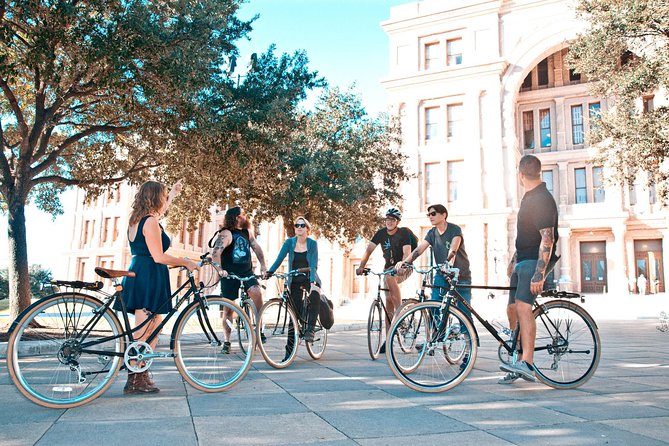
Your day begins at 506 Walsh St, Austin, TX 78703, and you’ll come back to that same area when the tour ends. You’ll receive a mobile ticket, and the tour is offered in English—handy if you want a guided explanation without language friction.
Once you meet your guide, you’ll get what you need to ride: a bicycle and a helmet. The tour also includes CYB Equipment Protection, which is essentially peace of mind around the gear during the activity. If you’re planning to bring your own bike, skip that idea here—this tour is built around their bike setup.
Because you’re in central Austin, the meeting area is near public transportation, so you’re not forced into a long taxi trek just to start. Still, you should aim to arrive a few minutes early so you’re not rushing through fitting and orientation.
You can also read our reviews of more tours and experiences in Austin.


The first pedal: Lady Bird Lake and easy art spotting
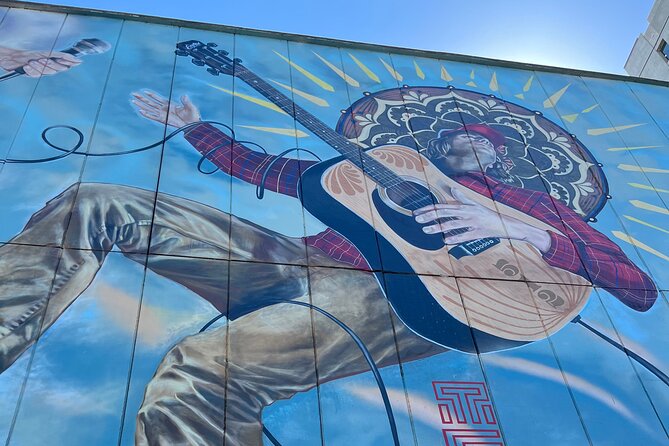
The route gets moving with a stop near Lady Bird Lake, where you’ll explore around Austin’s local body of water. This is one of those segments that works well even if you’re new to biking or you’re still waking up as a traveler.
The big value here is pacing. Instead of throwing you straight into the busiest streets, you get a gentle warm-up while your guide points out art along the way. It’s also a good chance to get the feel of the bike and how your guide handles the group.
From a practical standpoint, this stop also helps you settle your expectations: this tour is about what the city looks like in motion. You’re not trying to squeeze into galleries. You’re moving through public spaces where art is part of daily life.
Downtown Austin murals and sculptures: the part that clicks fast
Next, you roll into downtown, where the tour leans hard into murals, sculptures, and architecture. Expect about 40 minutes here, which is enough time to see multiple pieces without the walk-too-long problem.
This segment is especially useful if it’s your first time in Austin. From street-level, downtown can feel like a blur. On the bike, you’re covering distance while still slowing down for the visuals. Your guide’s job is to connect the dots—why these murals are where they are, what they’re responding to, and how they fit into Austin’s public art identity.
One reason this part earns top marks is simple: the guides keep the ride from turning into a moving slideshow. Guides like Trey are praised for being enthusiastic and giving solid context, not just naming locations. And because you’re not alone, you’re free to ask questions when something catches your eye.
Old West Austin through the lens of Art in Public Places
As the tour continues, you’ll hear about Austin’s Art in Public Places program while you pedal through downtown and Old West Austin. This is where the murals stop being random and start feeling like a theme.
What you gain is a mental map. You begin to notice how Austin places art where people already walk, wait, park, and commute. That matters because it changes how you view the city after the tour—you start spotting details on your own, even when you’re not looking for them.
A tour like this works best when you let yourself be a little curious. If you see a wall piece, lean in for the story your guide shares. It’s the difference between seeing color and understanding intention. You’ll likely leave with a sharper sense of which neighborhoods have their own visual language.
Victorian charm in the Bremond Block Historic District

Here’s the fun twist: you’re not just moving through downtown. You’ll also pass the historic Victorian homes in the Bremond Block Historic District. This stop gives you a sense of Austin that isn’t all high-rise and street art.
Why this matters for you: it’s an instant reality check that cities don’t grow in one style. Austin layers eras. You can feel it in the architecture—shape, scale, and details—especially when you’re riding at street level instead of viewing from afar.
If you love real-estate-and-design thinking, this section will be a highlight. One tour-goer even noted the architecture angle as a reason they enjoyed it, especially for people who like comparing buildings and layouts rather than just absorbing landmarks.




Frost Tower and modern Austin: seeing the contrast in real time
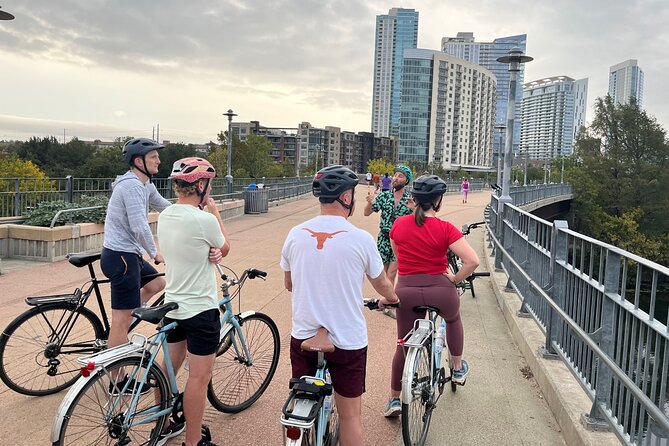
After the Victorian neighborhood feel, you switch gears to modern architecture. You’ll encounter the Frost Tower and Austin’s newer skyline, where clean lines and glassy massing read totally different from older homes.
This contrast is the point. It’s one thing to say a city has history and development. It’s another to bike past them back-to-back—Victorian streets, then modern towers—so your eyes understand the shift without needing a lecture.
Also, this is where you’ll appreciate the route design. Your guide doesn’t treat it as two unrelated neighborhoods. They frame it as Austin’s ongoing evolution, which makes your photos look better too. (You’ll get both “then” and “now” in the same roll of your camera.)
Texas State Capitol stop: the stories you remember
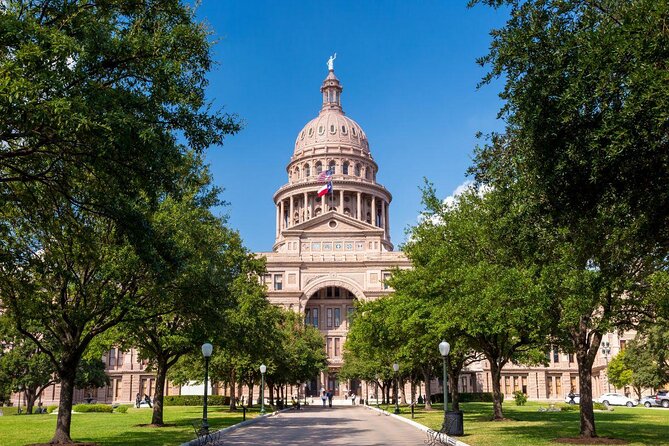
The tour’s final main stop is at the Texas State Capitol, with about 10 minutes there. It’s a short window, so think of it as a photo-and-context moment rather than a full visit.
The quality of this part depends on your guide, and that’s not a drawback—it’s a promise that you’ll get explanations tailored to your group. Guides share stories, and you may hear playful details—people describe getting gossip and context about the building and what it symbolizes in Austin.
If you want more time inside, plan that for later. This bike tour is designed to keep you moving and returning to the starting point on schedule. Still, even a quick stop can help you understand the rest of the city, because it gives you a reference point for everything you saw along the way.
Safety, pace, and group control: what “small group” really means
The tour runs with a maximum of 15 travelers, and that’s a big deal. In a large group, your guide becomes a traffic controller. Here, they can actually scan the line, keep you together, and answer questions without repeating the same thing ten times.
Safety is also a recurring theme. One rider noted the ride felt safe because it’s mostly on dedicated bike lanes, and another praised the guide for making sure the whole group stayed together. That kind of group management is what helps a first-time biker enjoy the experience instead of worrying constantly.
In terms of effort, the tour is described as having a reasonable pace with no hills to stress you out. That doesn’t mean it’s a sit-and-glide cruise. You’re still biking, so bring water, wear comfortable clothes, and be ready for a steady ride for about 2.5 hours.
The $75 value: what you’re really paying for
At $75 per person, you’re not just paying for bike time. You’re paying for three things that add up fast on your own: a professional guide, a bike, and a helmet, plus CYB Equipment Protection.
If you’ve ever rented a bike in a new city, you know the hidden cost is figuring out where to go and what you’re looking at. This tour bundles that decision-making into one outing. Even if you later explore on your own, the tour helps you build a route logic—what’s close to what, what neighborhoods feel different, and where the art is concentrated.
Also, booking seems popular: on average this is booked about 13 days in advance. If your dates are fixed, it’s smart to reserve early so you’re not hunting for space last-minute.
And yes, gratuity isn’t included. If you enjoyed the guide’s pacing, explanations, and safety attention, budgeting a tip is the normal move.
Tips you can use right after: music, food, and where to roam
A great guided city tour doesn’t end when the tour ends. This one often sets you up to explore further, with suggestions for places to visit on your own. People specifically mention music scene recommendations and even having local music playing during the ride.
If you’re planning your Austin days, this is useful. You can turn the tour into a launchpad: go back to a neighborhood you liked, track down one of the art stops you want to see again, or follow a music or nightlife suggestion that matches your taste.
Just keep expectations realistic. A bike tour doesn’t replace a museum visit. It’s more like a smart street-level orientation that helps you decide what to do next.
Weather reality: what to wear so the ride feels good
The tour operates in all weather conditions, and you’re told to dress appropriately. That’s a good sign if you travel on a schedule that can’t flex easily. It also means you should plan clothing like you would for outdoor walking—something breathable, plus rain protection if needed.
If conditions are poor enough to cancel, you’ll be offered another date or a full refund. That’s reassuring, but the best move is still to show up ready. Your comfort on the bike will shape how much you enjoy the murals, the neighborhoods, and the Capitol stop.
Should you book it: who it fits best
Book this tour if you’re:
- In Austin for a short time and want a clear, walkable-and-bikeable feel for the city
- Interested in public art and architecture, not just one-off landmarks
- Hoping for a light workout that’s paced for most riders
- The kind of traveler who likes asking questions and getting local direction from a guide
Consider skipping or swapping plans if you:
- Want long museum-style time inside major sites (this is a moving, outdoor experience)
- Don’t feel comfortable riding a bike for about 2.5 hours, even at a reasonable pace
Final verdict: a strong first Austin “welcome ride”
I’d call this a smart, friendly intro to Austin’s look and feel. For $75, you get a guided loop that shows you public art, historic streets, and modern skyline contrast, all while helping you build your own plan for the rest of your trip. If you show up ready to ride and stay with the group, you’ll come away with more than photos—you’ll have a mental map and specific leads for what to do next.
If you’re meeting Austin for the first time, this is one of those bookings that can save you time later. And if you end up biking back to a favorite wall or neighborhood on your own, you’ll feel like you cracked the city code on day one.
FAQ
How long is the Austin Art and Architecture Bicycle Tour?
It runs for about 2 hours 30 minutes.
What is included in the price?
The tour includes a professional guide, use of a bicycle, use of a helmet, and CYB Equipment Protection.
Where do I meet for the tour?
You meet at 506 Walsh St, Austin, TX 78703. The tour ends back at the meeting point.
What language is the tour offered in?
The tour is offered in English.
What fitness level do I need?
You should have moderate physical fitness since you’ll be riding for the full tour duration.
What if the weather is bad?
The tour operates in all weather conditions, but if it’s canceled due to poor weather, you’ll be offered a different date or a full refund.