
REVIEW · AUSTIN
Downtown Austin Scavenger Hunt Adventure
Book on Viator →Operated by Urban Adventure Quest · Bookable on Viator
Austin turns into a game fast. A smart phone scavenger hunt lets you explore downtown at your pace while solving clue-based challenges tied to famous sights like the Texas State Capitol and the Driskill. I also love the mix of landmarks and street-level scenes, so you get more than one “postcard view” and you actually learn the city in small, do-this-next steps.
The big thing to think about is tech: you’ll need at least one smart phone per team with a U.S. cellular data service plan to activate and play the adventure.
In This Review
- Key Things You’ll Notice Right Away
- How This Phone-Driven Hunt Feels in Real Life
- The Texas State Capitol: where your clues begin
- Driskill Stop: historic hotel stop with a puzzle twist
- East Sixth Street: where the city energy shows up
- Boardwalk at Lady Bird Lake: a breather between questions
- How the Walking, Timing, and Pace Actually Work
- Price and Group Size: does $49 per group make sense?
- What’s Included (and what you must bring)
- Weather Reality: heat, rain, and the indoor break
- Which Stops Suit Families, Couples, and Newcomers
- Likely Downsides to Know Before You Book
- Best Time to Go and How to Use Your Start Time
- Should You Book This Austin Scavenger Hunt?
- FAQ
- Where does the scavenger hunt start and end?
- How long will the Austin scavenger hunt take?
- How much walking is involved?
- Do we need a smart phone to play?
- What group size is allowed?
- What if it rains, or I need to cancel?
Key Things You’ll Notice Right Away

- Start whenever you want within the day window and set your own pace, instead of matching a fixed group tour time.
- A built-in point system and leader board adds friendly competition without killing the sightseeing vibe.
- Walk about 2.5 miles with frequent stops, so it feels like breaks plus momentum, not a nonstop stroll.
- Stops include major downtown landmarks, from the Texas State Capitol to the Driskill, East Sixth Street, and the Boardwalk at Lady Bird Lake.
- A short indoor break can help with Texas heat, based on real family feedback.
- One voucher covers your team of 2–5, so it’s simple if you’re traveling as a family or small group.
How This Phone-Driven Hunt Feels in Real Life

This adventure is basically a self-guided walking game with a very clear structure. You use your smart phone as your guide, then follow the clues and prompts from stop to stop. Your game progress is tracked, your team earns points, and there’s a final score posted to a city leader board if you want that extra competitive angle.
What makes it work so well for downtime travelers is control. You can start when you want (inside the daily operating window), pause to grab food, then jump back into the puzzle without anyone herding you along. It also helps that the route is designed with “stop and solve” pacing, so you’re not just sightseeing for three hours straight.
One more practical note: it’s listed as a private activity, meaning only your group plays the hunt. With a team of 2–5, it’s easy to coordinate and share the screen without feeling like you’re competing for attention.
You can also read our reviews of more tours and experiences in Austin.



The Texas State Capitol: where your clues begin

You kick things off near 1201 Brazos St, Austin, TX 78701, with the Texas State Capitol as Stop 1. This is a smart starting point because it anchors the whole hunt in one of the city’s most recognizable landmarks. Expect to begin with early questions that help you understand how the game wants you to think.
Why this start works for you:
- You get orientation quickly. You’re already in the heart of downtown, so every later stop feels connected instead of random.
- It’s a good “starter challenge” for kids and adults. Early puzzles tend to set the rhythm—read, look around, solve, move on.
What to watch for: you’ll still be learning the format while you walk. If your group needs a smoother warm-up, plan to take your time at the first stop and get everyone comfortable with how the phone prompts work.
Driskill Stop: historic hotel stop with a puzzle twist
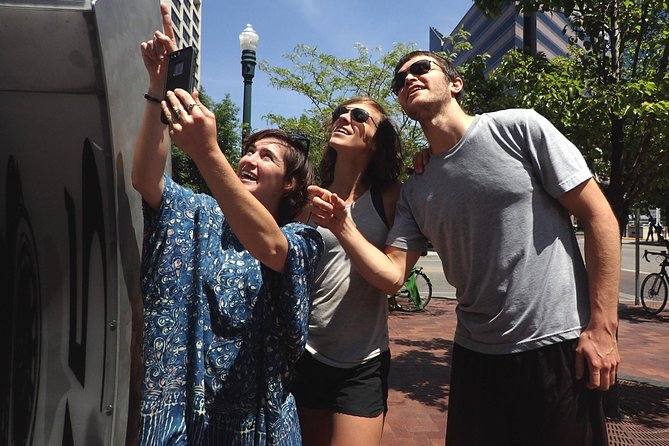
Stop 2 takes you to the Driskill, one of the downtown historic hotels on the route. This part of the hunt gives you a break from just street-and-sidewalk visuals by layering the game over a landmark setting.
For many first-time Austin visitors, a historic hotel stop is a great change of pace. You can slow down, look around, and read the clues without feeling like you’re only scanning storefronts. It also tends to be a fun “spot check” for mixed ages—adults enjoy the context, and kids often like the challenge format more than the building itself.
Drawback to keep in mind: if your group expects every single stop to be a major museum-level stop, this route is lighter on that. You’re there for the hunt experience, not a long guided interior visit.
East Sixth Street: where the city energy shows up

Stop 3 is East Sixth Street. This is where the hunt starts to feel more like Austin-in-motion—more street texture, more walking, more chances to notice little details around you.
The practical value here is that you’re actively learning while moving. Instead of “walk past it, move on,” the game nudges you to look more carefully at what’s around you. That kind of attention pays off later, because you tend to remember the places you solved them in.
One thing to manage: street puzzles can sometimes feel less directly tied to the city specifics than you’d expect. Based on feedback, a few challenges weren’t as Austin-focused as some groups wanted. If your group is strict about theme purity, you might feel that pinch here more than at the Capitol or the major landmarks.
Boardwalk at Lady Bird Lake: a breather between questions
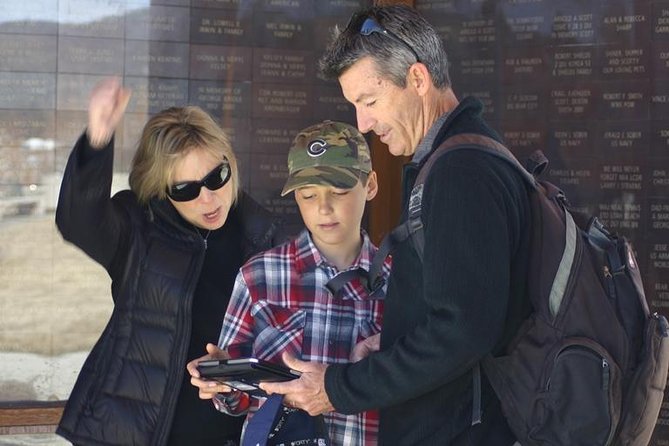
Stop 4 brings you to the Boardwalk at Lady Bird Lake. Even if you’re not there for a long scenic hang, this stop matters because it breaks up the “downtown tighten-the-scope” feeling with a different kind of atmosphere.
This is also a good moment to reset. By the time you reach the lake area, you’ve done enough walking and clue-solving that a lighter, more open-feeling stop can feel like a reward. It’s the part of the hunt where you can stretch, check in with your team, and decide whether you want to keep hustling or slow down for photos and snacks.
If your group is sensitive to heat, this stop can help break the tension—especially since the experience includes at least some indoor time to cool off, based on family feedback.






How the Walking, Timing, and Pace Actually Work

The hunt is listed at about 3 hours, with roughly 2.5 miles of walking total. That’s a manageable distance for most people with moderate fitness, especially since the design includes numerous stops along the route for challenges.
The key is the “numerous stops” part. Three hours sounds like a long time if you picture continuous walking, but the stop-and-solve pacing changes the feel. You’re not just covering ground—you’re breaking it up into smaller tasks.
Pace is also your choice. The software lets your team play at your own speed. If you like to snack mid-hunt, you can pause, eat, and then rejoin without feeling behind. For families, this flexibility is huge. For groups with teens, it can also keep the energy up because nobody has to pretend to be into the same thing at the same time.
Price and Group Size: does $49 per group make sense?
The price is shown as $49.00 per group (up to 5), and the structure is team-based. One mobile ticket covers your team of 2–5 people, so you can split the cost across a family or a small crew instead of paying per person like a typical guided tour.
That value improves when you compare what you get:
- A structured route with historic and downtown stops
- A game format that keeps everyone engaged
- The ability to pause for food and still finish at your own rhythm
- A competitive leader board option if your group likes friendly bragging rights
Two more bits to know:
- The “buy 3, get 2 free” note can make the price feel especially good for larger family groups.
- Teams must book together to stay in the same adventure, so coordinate everyone’s booking in one go.
If you’re traveling solo, this format usually matters less. It shines when you have a team to share the phone and discuss clues.
What’s Included (and what you must bring)
Included is simple: one scavenger hunt tour for a team of 2–5 people. That’s it. Your experience is activated and played through the smart phone system, not handed to you as a printed map and a checklist.
Not included is the smart phone itself. You’ll need at least one smart phone per team with U.S. cellular data service. That’s non-negotiable for actually playing, because you need the phone to function as the guide during the hunt.
Other practical planning points:
- It runs in all weather conditions, so dress for rain, heat, and sun.
- It’s listed as operating daily 8:00 AM–7:00 PM.
- It’s near public transportation, which can help you avoid the full “parking hunt” downtown.
- Service animals are allowed.
Weather Reality: heat, rain, and the indoor break
Austin can be hot, and the hunt is designed to keep going anyway. The route operates in all weather, so the plan is: go, solve, pause, and keep moving—just with the right clothing and water.
The standout reassurance is that there’s an indoor portion that can help you cool off, based on family feedback. That matters a lot if your timing lines up with peak heat or if someone in your group gets uncomfortable outdoors.
What I’d do to make it easy:
- Wear breathable clothes and comfortable walking shoes.
- Bring water, even if you plan to stop for a snack.
- If it’s raining, expect the route to still happen, so keep your phone protected and your team ready to slow down for slippery sidewalks.
Which Stops Suit Families, Couples, and Newcomers
This is a strong pick if you’re new to downtown Austin and want a structured way to learn the city without booking a traditional walking tour. The combination of landmarks and street scenes helps you get bearings fast, and the puzzle format gives you a reason to pay attention.
Families tend to like it because it keeps kids busy and adults engaged at the same time. One of the best parts of this style of game is shared problem-solving—multiple generations can take turns reading clues and scanning for details.
Couples often enjoy it because it feels like an activity date with teamwork. You’re not stuck listening to a guide talk for hours, but you’re also not wandering aimlessly.
Competitive teams will like the point system and leader board, since it adds stakes without forcing you to run.
Likely Downsides to Know Before You Book
Here are the real-world friction points to think about ahead of time:
1) Phone and data requirements
If your team doesn’t have a smart phone with the right U.S. cellular data plan, you can’t run the hunt smoothly. This is the biggest single logistical requirement.
2) Not a perfect “full downtown loop” feeling
Even though the activity ends back at the meeting point, some groups prefer a more loop-like route. The Austin layout is tricky because the Capitol sits at one end and many other cultural stops sit farther out, so the overall vibe can feel more out-and-back than circular.
3) Some puzzles may feel loosely connected
Feedback indicates a few challenges weren’t city-related in the way some groups expected. If your group loves only strict sightseeing facts, you may want to mentally shift your expectations toward the “game first, history second” design.
4) UT campus isn’t the focus
If you’re hoping to make it to the University of Texas area, this downtown course may feel limited. The route concentrates on downtown landmarks instead.
Best Time to Go and How to Use Your Start Time
You can activate the hunt and start when you want during the daily window. That gives you a lot of power. If you hate the hottest hours, pick an earlier slot or aim for late afternoon when the sun has softened.
Because the hunt lasts about 3 hours and covers 2.5 miles, plan to treat it like a real activity block, not a quick wander. Then use the built-in pauses to add Austin snacks. You’ll get more satisfaction from your stops if you plan small food breaks rather than trying to squeeze in a full meal without losing game momentum.
Also, if your group includes different walking speeds, the flexible pace helps. You don’t need everyone marching at the same stride to keep up with a human guide.
Should You Book This Austin Scavenger Hunt?
Book it if you want an active way to get oriented in downtown Austin. The smartphone-led clues, the point system, and the mix of major landmarks (Capitol, Driskill, East Sixth Street, and Lady Bird Lake boardwalk) make it a great “first-timer” experience. It’s also ideal for families with older kids and teens who like to stay busy and solve things together.
Skip it if you hate phone-dependent activities or if your team can’t reliably use a smart phone with U.S. cellular data. Also skip it if you want a traditional guided tour with deep, continuous narration and you’re not in the mood for occasional puzzles that feel only loosely tied to the city.
If you’re okay with a game-style walking route, this is a fun, practical way to learn downtown Austin while keeping control of your pace.
FAQ
Where does the scavenger hunt start and end?
It starts at 1201 Brazos St, Austin, TX 78701, USA. The activity ends back at the meeting point.
How long will the Austin scavenger hunt take?
Plan on about 3 hours total (approximately).
How much walking is involved?
You should expect about 2.5 miles of walking during the full adventure.
Do we need a smart phone to play?
Yes. You need at least one smart phone per team, and it must have a U.S. cellular data service plan.
What group size is allowed?
Teams are limited to 2–5 people, with a maximum of 5 per team. Your team will play as a private group, only with your group.
What if it rains, or I need to cancel?
The adventure operates in all weather conditions, so dress appropriately. Free cancellation is available up to 24 hours in advance for a full refund; cancellations made less than 24 hours before the start time are not refunded.