REVIEW · AUSTIN
Austin: Downtown History Walking Tour
Book on GetYourGuide →Operated by Nitty Gritty City Tours · Bookable on GetYourGuide
Austin’s downtown stories run like a soundtrack. With guides like Emily or Caroline leading the way, I love how they connect street corners to major turning points, and I love the stop inside the Driskill Hotel. Just note there’s limited seating, so expect more standing than relaxing on this 2-hour walk.
If you’re trying to understand why Austin talks the way it does, and how it became the Live Music Capital, this is a solid place to start. It’s a $29 guided walk that covers about 1.1 miles, from Halcyon Coffee to 320 Congress Ave., with a mix of music history, notorious local lore, and architecture you’ll actually notice.
In This Review
- Key highlights to plan around
- Two hours to understand Austin’s biggest “why”
- Meeting at Halcyon Coffee and setting the tone on 4th Street
- Warehouse District walk: how the past keeps haunting the blocks
- Antone’s Nightclub: music history with names, not vibes
- Downtown Austin and Sixth Street: where legends and daily life meet
- Step inside the Driskill Hotel: Romanesque halls and big city ambition
- Angelina Eberly Statue: a quick stop with a personal angle
- Koppel Building and the end at 320 Congress Ave.
- Price and logistics: what $29 gets you in real life
- Who should book this tour (and who might skip it)
- Should you book this Austin Downtown History Walking Tour?
- FAQ
- Where do I meet the tour guide?
- How long is the walking tour?
- What is the total walking distance?
- What does the tour cost?
- Is the tour offered in English?
- Does the tour run in bad weather?
- Are restrooms available during the tour?
- Can I record video during the tour?
- What are the age guidelines?
- Is there a cancellation option?
Key highlights to plan around
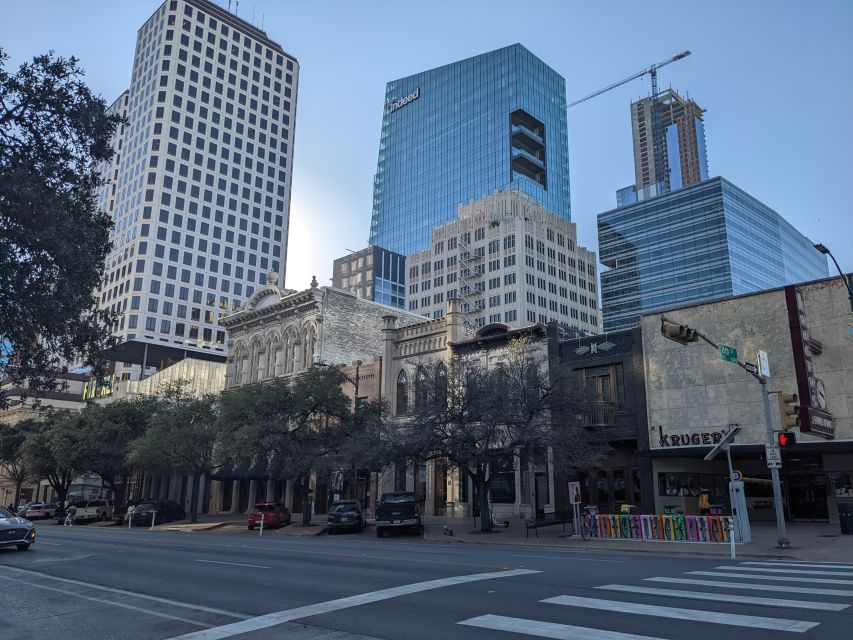
- Driskill Hotel interior visit: Romanesque-style halls plus stories you won’t get from street signs.
- Antone’s Nightclub stop: where Austin music culture gets real, fast.
- A quick history of a vice district turning point (1913): the city’s attitude didn’t appear by accident.
- Keep Austin Weird explained through people, not slogans: legends, artists, and free spirits tied to specific blocks.
- A short total distance, but mostly on your feet: comfort matters more than speed.
Two hours to understand Austin’s biggest “why”
Austin can feel like it’s made of contradictions. Cowboys and condos. Big venues and small stages. History you can read, and history you have to hear.
This tour gives you both, in the right order. You start at Halcyon Coffee on 4th Street and follow a tight downtown loop that turns city evolution into a walkable story: where Austin came from, how it changed, and why music and weirdness became part of the civic identity. For $29, the value isn’t just the sightseeing. It’s the guided context—especially the Driskill Hotel interior visit, which is the kind of detail you might miss on your own.
The pace is friendly, and the best guides make it interactive. Expect a lot of “look at that” moments and room for questions as you go. The main trade-off is physical: the route is short, but sitting chances are limited.
You can also read our reviews of more walking tours in Austin


Meeting at Halcyon Coffee and setting the tone on 4th Street
You meet outside Halcyon Coffee at the corner of 4th Street and Lavaca St. That matters more than it sounds. Starting in a working neighborhood hub helps you understand Austin as a living city, not just a museum you’re walking through.
From the first minutes, the storytelling is built around transformation. The tour’s early thread is what used to be a rowdy vice district—and then the big shift that happened in 1913. You’ll hear how cities don’t just change laws; they change what people feel comfortable doing in public.
Practical tip: this is a rain-or-shine walk. Wear shoes you can trust for downtown sidewalks, and bring water. You’ll be on the go enough that the “just grab a bottle later” plan usually turns into stress.
Warehouse District walk: how the past keeps haunting the blocks
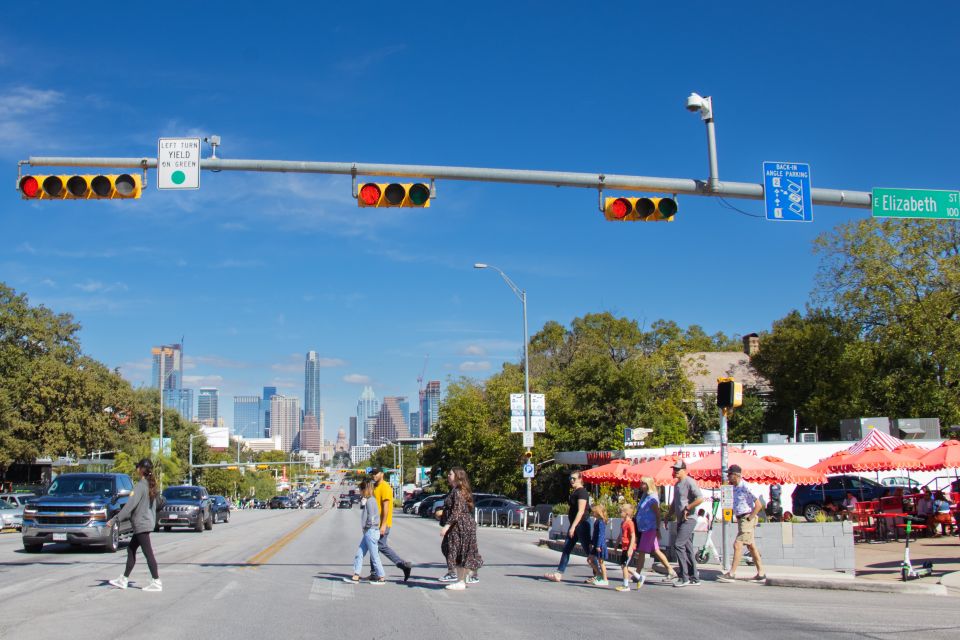
The route moves you toward the Warehouse District, where the architecture and street layout do some of the talking even before the guide does. This part works well if you like seeing how neighborhoods build their identity over time, from commerce to culture.
Here’s what I’d pay attention to: how the tour frames places you might assume are purely modern. The guide ties past uses of buildings to later meanings—so you’re not just seeing blocks, you’re learning how Austin layered on top of itself.
Time-wise, this is one of the shorter stops, but it’s a useful warm-up. It gets your eyes trained for the rest of the tour: you start noticing corners, façade details, and “why this spot got famous” patterns.
Antone’s Nightclub: music history with names, not vibes
Then you get to Antone’s Nightclub, one of the stops that helps the Live Music Capital story feel specific. Music history is easy to turn into vague bragging. This stop helps avoid that by grounding the story in a real venue.
When the guide talks about Austin music becoming central to the city’s identity, you’ll hear it as a chain of people, energy, and community—not just a marketing slogan. The fact that you’re physically outside a key club makes the story stick, because you can picture the era while also seeing today’s street.
This is also a good point to ask questions if you’re the type who likes depth. The best guides adjust what they emphasize based on what you ask, and many people use this stage of the walk to clarify what to explore next.
Downtown Austin and Sixth Street: where legends and daily life meet
After Antone’s, you’ll continue through downtown Austin and a short run by the Sixth Street Historic District. Sixth Street is the kind of place where tourists tend to chase the obvious part: lights, venues, crowds. This tour steers you toward the other part—the historical reasons the area earned its reputation.
The guide’s job here is to connect the dots between entertainment districts and the people who shaped them. You’ll hear how Austin’s attitude formed alongside live music, and why certain neighborhoods became magnets for free spirits and artists.
One consideration: because this is a walk-through section and the tour has limited opportunities to sit, you might find your feet are doing more work than your brain. That’s not a deal-breaker, but it’s worth planning for if you’re tired or you’re coming straight from travel.
You can also read our reviews of more historical tours in Austin




Step inside the Driskill Hotel: Romanesque halls and big city ambition
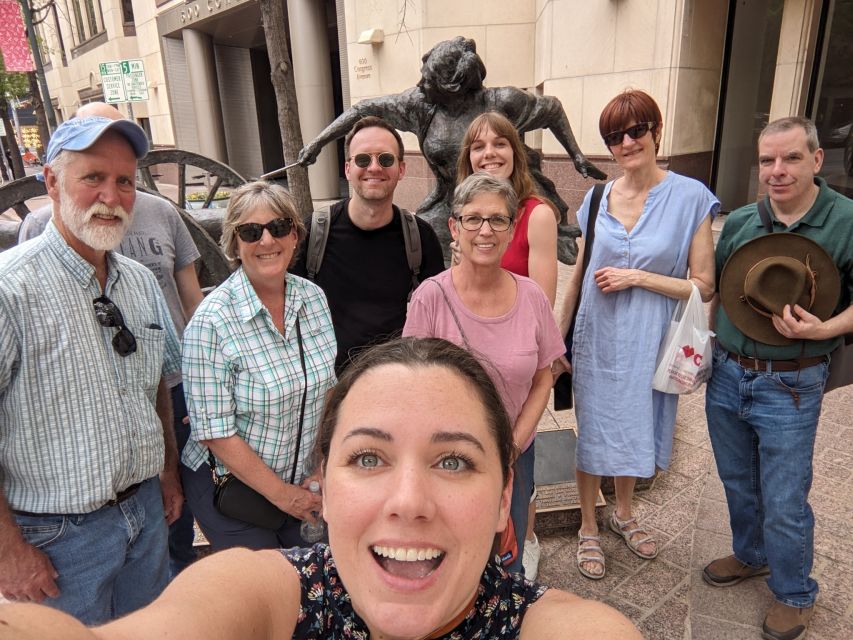
The Driskill Hotel is the star stop, no argument. You don’t just pass by it—you step inside and hear the story in the setting where it happened. The guide uses the Romanesque-style halls as a backdrop for tales about eccentric and visionary figures who helped shape Austin.
This stop is valuable for two reasons.
First, it gives you an interior moment. Many downtown tours are all street-level and exterior photos. Here, you get to experience how a legendary hotel’s space changes your understanding of the city. Even if you don’t care about hotels, you’ll start seeing why certain buildings become symbols.
Second, the guide ties the hotel’s story to Austin’s larger evolution. The message isn’t just that the Driskill is fancy. It’s that people with money, taste, and ambition influenced what downtown would become—and what kind of stories would later get told about the city.
Drawback to keep in mind: you’ll be walking, then standing for a guided moment inside. So keep your stamina up for this mid-tour highlight.
Angelina Eberly Statue: a quick stop with a personal angle
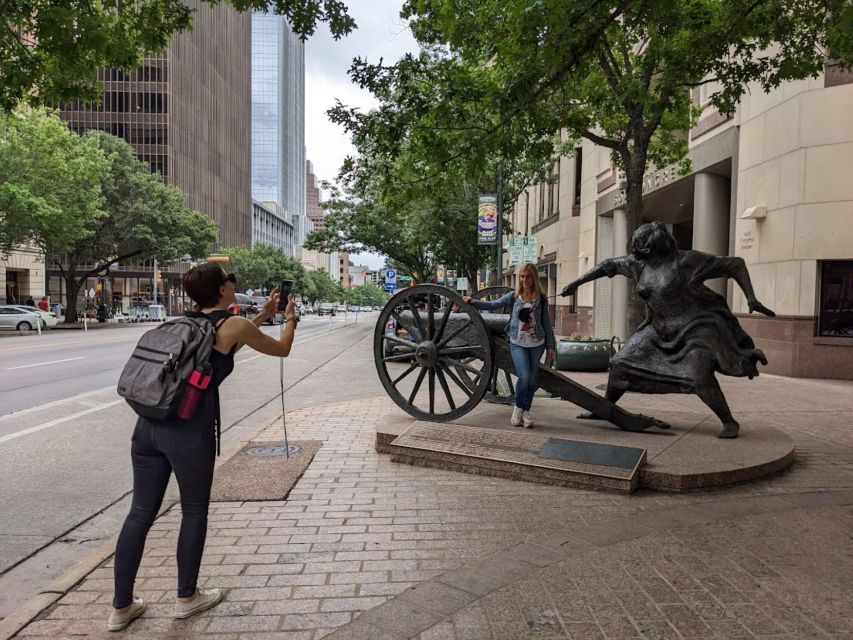
Next is the Angelina Eberly Statue, a shorter visit, but it’s placed like a breather between heavier stops. This is where the tour gives you a human scale to balance all the downtown momentum.
If you like history that connects to real people rather than just institutions, this stop helps. The guide uses it to reinforce the idea that Austin’s identity is built from personalities—local legends, artists, and outsiders who helped shape the city’s voice.
At just about ten minutes, it won’t feel like a deep museum stop. But it can be a nice reset for photos and reflection before you head to the final stretch.
Koppel Building and the end at 320 Congress Ave.
The walk finishes with the Koppel Building visit, then you end at 320 Congress Ave. This part helps you see downtown’s growth as something tangible. Even when you’re moving quickly, you start recognizing patterns: building names that carry stories, streets that connect eras, and architecture that explains why certain areas became power centers.
The tour’s closing works because it brings you back into the core of downtown—where you can immediately use what you learned. Once you’re done, it’s easier to choose what to see next because you understand the “why” behind the “what.”
If you want an extra win, plan your next meal or stop near your ending point. That way you can keep the momentum without forcing yourself to retrace your steps.
Price and logistics: what $29 gets you in real life
At $29 per person for a guided, two-hour walk, you’re paying for three things:
- A trained storyteller who turns architecture and street names into context.
- A high-value access moment at the Driskill Hotel interior.
- Route efficiency: a compact loop that teaches a lot without eating a whole day.
The main logistics are straightforward. It’s a 2-hour experience covering about 1.1 miles, with mostly standing and limited sitting. Restrooms are available at the starting point and near the end, not constantly along the way.
A few extra rules to note:
- No video recording
- The tour is suggested for ages 13+, and it’s marked as not suitable for children under 13
- It runs rain or shine
- If you need a voice amplifier at every stop, you can request that when you arrive
One more thing: the info says wheelchair accessible, yet it also says it’s not suitable for people with mobility impairments. If that applies to you, don’t guess—ask the operator what parts of the walk and waiting spots look like in practice.
Who should book this tour (and who might skip it)
This is a great fit if you:
- Want a fast way to understand why Austin became the Live Music Capital
- Like history that includes characters, folklore, and local legends
- Appreciate architecture and want help noticing details you might otherwise ignore
- Enjoy interactive guiding, with time to ask questions
Consider skipping or switching plans if you:
- Need frequent seating breaks
- Are uncomfortable standing for a two-hour downtown walk
- Want a purely self-paced experience
Should you book this Austin Downtown History Walking Tour?
Yes—if you want context in a short amount of time. For $29, the mix of street storytelling plus the Driskill Hotel interior visit is the strongest reason to book. You’ll walk away with a clearer sense of what shaped Austin: the 1913 transformation away from a vice district, the music story anchored by Antone’s, and the local attitude behind Keep Austin Weird.
If your schedule allows only one guided walk downtown, this is a smart choice. It gives you enough structure to explore the rest of Austin with better instincts, and it’s short enough to fit into a busy trip. Just make sure you’re ready for a mostly standing, rain-or-shine walk.
FAQ
Where do I meet the tour guide?
Meet your guide outside Halcyon Coffee on 4th Street at the corner of Lavaca St.
How long is the walking tour?
The tour lasts about 2 hours.
What is the total walking distance?
The route covers about 1.1 miles.
What does the tour cost?
The price is $29 per person.
Is the tour offered in English?
Yes, the live tour guide speaks English.
Does the tour run in bad weather?
Yes, the tour takes place rain or shine.
Are restrooms available during the tour?
Restrooms are available at the starting point and near the end of the tour.
Can I record video during the tour?
No, video recording is not allowed.
What are the age guidelines?
The tour is recommended for ages 13+, and it is marked as not suitable for children under 13.
Is there a cancellation option?
Yes. Free cancellation is available up to 24 hours in advance for a full refund.