REVIEW · AUSTIN
The Story of Austin: Downtown History Walking Tour
Book on Viator →Operated by Nitty Gritty City Tours of Austin · Bookable on Viator
Austin has a dark side, and this walk names it. You’ll get a tight 2-hour guided loop through downtown stories, from the Historic 6th Street era to the city’s vice-district past—no wandering required. Guides like Emily, Caroline, and David are known for turning street corners into clear, human-scale history, with plenty of local pointers along the way.
Two things I really like about this tour are the storytelling focus and the mix of well-known icons with the stranger corners of the past. You’ll learn how Austin’s entertainment and music reputation grew alongside greed, politics, and vice, then land on a major centerpiece: the Driskill.
One consideration: there are no places to sit at the stops, and it’s a walk with only a few short chances to regroup—so bring water and plan for sidewalks.
In This Review
- Key highlights and what makes them worth your time
- Why this 2-hour downtown Austin walk works so well
- Price and value: $32 for a guided story + one real interior stop
- Getting your bearings: the route, distance, and comfort reality
- Stop 1: Dumont’s Down Low Bar and the origin story of Austin’s vice district
- Stop 2: O. Henry Home & Museum, plus the short-story connection
- Stop 3: Joseph and Susanna Dickinson Hannig Museum and the last Alamo survivor
- Stop 4: 6th Street then and now, with the music-scene payoff
- Stop 5: Inside the Driskill Hotel (1886) and how legends get made
- What you’ll likely learn and why it matters for your Austin trip
- Should you book it? Yes, if you want downtown context fast
- FAQ
- How long is The Story of Austin: Downtown History Walking Tour, and how far do we walk?
- Where does the tour start and where does it end?
- What’s included in the $32 ticket price?
- Do we go inside any buildings during the tour?
- Is this tour appropriate for kids?
- Is there a place to use the restroom, and what if weather is bad?
Key highlights and what makes them worth your time
- A short 1.1-mile loop that still gives you a real feel for downtown’s layout
- Street-level history told outside at most stops, with just enough time at each place
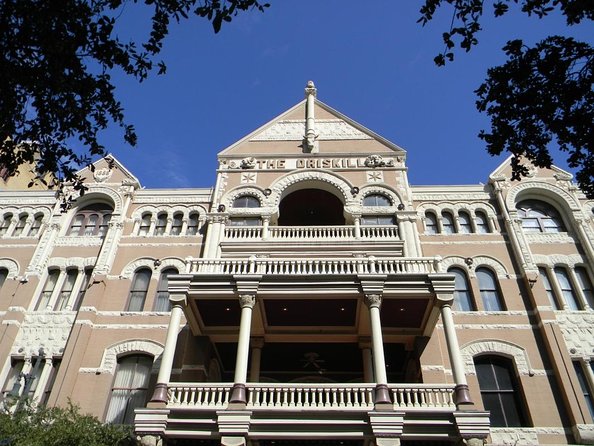
- A guided visit inside the Driskill Hotel (built in 1886)
- Austin’s music-meets-mischief angle, centered on 6th Street
- Mature themes handled thoughtfully, with a recommendation for age 13+
Why this 2-hour downtown Austin walk works so well
This is a smart first-day activity. In about two hours, you get an overview of central Austin without needing to study a map for hours. You also leave with names, locations, and story themes you can use to pick what to do next.
The pace is built for “walk and listen,” not marathon sightseeing. It’s a moderate-ability route with flat sidewalk time, and you’ll get breaks for explanations rather than constant motion.
And there’s something else: the tour doesn’t pretend Austin’s past was tidy. It connects the city’s legend-making to its underbelly—then shows how that same energy evolved into the Austin people experience today.
You can also read our reviews of more walking tours in Austin



Price and value: $32 for a guided story + one real interior stop
At $32 per person, the value comes from two places: a live guide and an admission-included moment. You’re paying for someone to connect dots you’d probably miss if you just self-walked—especially for the Victorian-era red light district context and how it ties into modern 6th Street.
Most stops are outside, and you’re not paying separate admissions there. The big payoff is that you do get inside the Driskill Hotel, where the tour weaves in tales of greed, politics, vice, music, and celebrities—stuff you can’t see from the sidewalk.
Also, the group size stays reasonable with a maximum of 40 travelers. Smaller crowds usually mean easier questions and less of that lost-in-the-back feeling.
Getting your bearings: the route, distance, and comfort reality
You’ll cover about 1.1 miles total. The tour runs roughly 2 hours, and it finishes near downtown’s action, about two blocks from the start, outside the Koppell Building at East 4th Street and Congress Avenue.
The walking is on city sidewalks, and it’s designed for a moderate physical fitness level. Still, one practical heads-up: seating isn’t provided at stops. That’s normal for many city history walks, but it’s worth knowing so you don’t show up expecting benches.
A small logistics win: you can use the restroom at Halcyon Coffee without making a purchase, as long as you tell them you’re with the walking tour. One helpful move I recommend—do it about halfway through if you need the break.
Finally, this tour works best when the weather cooperates. It’s dependent on good conditions, and if it gets canceled due to poor weather, you’ll be offered a different date or a full refund.
Stop 1: Dumont’s Down Low Bar and the origin story of Austin’s vice district
You begin at Dumont’s Down Low Bar, starting with the origin story of the city and the “old west” mindset that helped build one of the biggest red light districts in the southwest. The tour frames this as part of how towns grow fast—entertainment, exploitation, and opportunism all show up in the same place and time.
What I like here is the tone-setting. It tells you to pay attention to the city’s contradictions: what was tolerated, what was marketed, and how that shaped Austin’s identity.
The drawback is also part of the format: you don’t go inside. So you’re relying on the guide’s narration and what you can see outside. Plan to listen closely during this first section—it sets the lens for the stops that follow.
Stop 2: O. Henry Home & Museum, plus the short-story connection
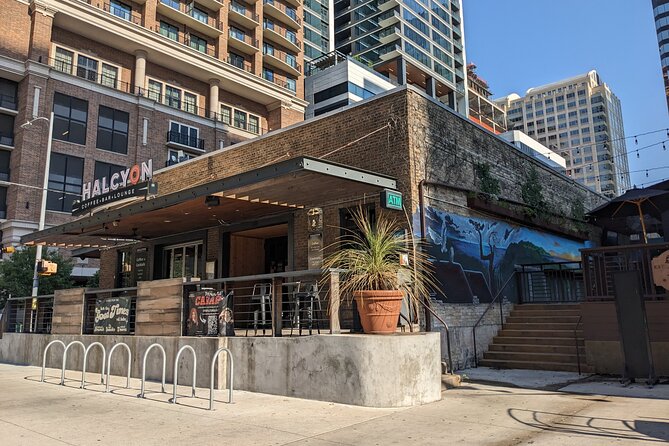
Next up is the O. Henry Home & Museum area. O. Henry lived in Austin before he became famous, and the guide uses the setting to share a few tales about his time here.
This stop works because it changes gears. After vice-district history, you get a literary lens—how Austin showed up in someone’s imagination, even before the rest of the world knew his name.
Again, you don’t go inside. You’re outside and focused on the stories attached to the address. If you enjoy author history and place-based storytelling, this is a good breather between heavier topics.
You can also read our reviews of more historical tours in Austin





Stop 3: Joseph and Susanna Dickinson Hannig Museum and the last Alamo survivor
Then you move to the Joseph and Susanna Dickinson Hannig Museum stop. The hook is right in the question the guide sets up: how did the last survivor of the Alamo end up living in Austin?
The value here is in the human thread. Instead of treating the Alamo as a distant legend, this stop connects the after-story—what happened to real people after the headlines faded.
You won’t enter the building here either. It’s short—about five minutes—so the guide is using this stop for impact rather than long sightseeing. If you tend to like history “starter chapters,” you’ll appreciate how efficiently this one lands.
Stop 4: 6th Street then and now, with the music-scene payoff
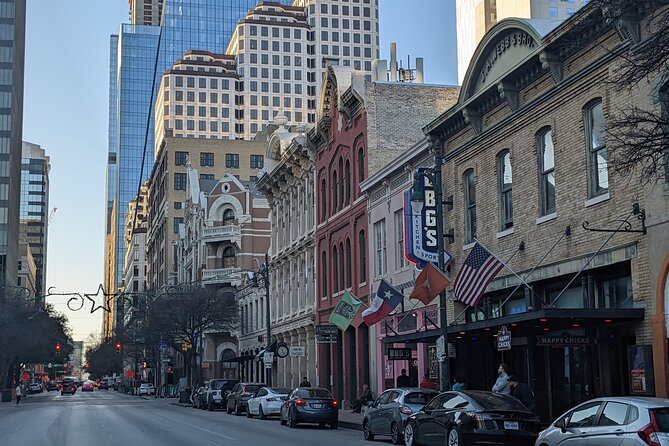
From there, you hit 6th Street, Austin’s most famous street. This is where the tour links past and present: what the street meant historically, and what it represents now as a music and entertainment hub.
What I like about this part is the balance. The tour doesn’t treat 6th Street like a theme park. It shows that Austin’s reputation grew from a mix of people chasing opportunity—artists included—alongside older, darker patterns.
The time here is short (about 10 minutes), so you’ll get the story framing more than a full walk-through of the entire street. You’ll likely want to continue exploring afterward on your own.
Stop 5: Inside the Driskill Hotel (1886) and how legends get made
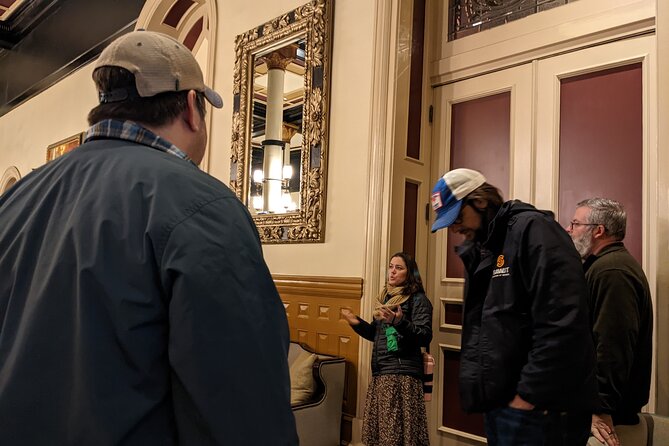
The final centerpiece is the Driskill Hotel, and this is the one stop you actually go inside. Built in 1886, it’s sometimes called the people’s hotel, and the guide uses it as a stage for stories about greed, politics, vice, music, and celebrities.
This is a smart ending. By the time you reach the Driskill, you’ve already built context for why certain kinds of wealth and entertainment show up in certain places. Going inside lets you connect atmosphere with narrative instead of staying purely on the sidewalk.
It’s also a practical break. Downtown can be hot, and one of the tour’s appeals is that you get a chance to step indoors during the walk. Even if you’re not chasing architectural details, the Driskill stop gives you a fuller sense of Austin’s glamour-era past.
You’ll finish near Congress Avenue, outside the Koppell Building at East 4th Street and Congress Avenue—perfect for grabbing a drink or starting your next plan without backtracking.
What you’ll likely learn and why it matters for your Austin trip
If you’re the type who likes understanding the “why” behind a destination, this tour gives you that. You don’t just hear facts. You learn how Austin’s entertainment reputation is tied to economic pressure, social rules, and people trying to make a living—whether through art, business, or something more complicated.
I also like that the tour is explicit about content: it includes material connected to the historic red light district, and it’s recommended for ages 13+ because of that. The guide approach keeps it historical rather than sensational, but it’s still not a kid-focused stop.
For first-timers, the real win is momentum. After this walk, you’ll have a downtown mental map and a handful of story themes to help you choose where to linger—especially around 6th Street.
And if you’re picky about pace, the guide format helps. Reviews mention a comfortable walking level with breaks, and one practical tip shows up again and again: bring water. (Downtown heat is real, even when the itinerary is short.)
Should you book it? Yes, if you want downtown context fast
Book this tour if:
- You want an Austin overview in about two hours without doing research first
- You like history that explains the present, especially 6th Street and the music scene
- You enjoy a mix of serious past and local legend—and don’t mind stories with edge
Skip it (or consider a different option) if:
- You strongly prefer hands-on sightseeing where you can enter lots of buildings (most stops here are outside)
- You need frequent seating breaks (there aren’t places to sit at stops)
- You want only light, family-friendly history (the red light district material is part of the story)
FAQ
How long is The Story of Austin: Downtown History Walking Tour, and how far do we walk?
It lasts about 2 hours and covers roughly 1.1 miles of walking.
Where does the tour start and where does it end?
It starts at Halcyon218 W 4th St, Austin, TX 78701, and ends at 320 Congress Ave, Austin, TX 78701, finishing outside the Koppell Building at East 4th Street and Congress Ave.
What’s included in the $32 ticket price?
Your guide is included, and admission is included for the Driskill Hotel stop. The other stops are outside with free admission as part of the tour experience.
Do we go inside any buildings during the tour?
Yes. You’ll be able to go inside the Driskill. The other stops are not entered.
Is this tour appropriate for kids?
The tour is recommended for ages 13+ due to content related to the historic red light district.
Is there a place to use the restroom, and what if weather is bad?
You may use the restroom at Halcyon Coffee without making a purchase if you let them know you’re with the walking tour. The tour requires good weather; if it’s canceled due to poor weather, you’ll be offered a different date or a full refund.