REVIEW · AUSTIN
Austin Self-Guided Driving & Walking Audio Tour Guide
Book on Viator →Operated by Drive with Action · Bookable on Viator
Austin by audio is a surprisingly easy win. This self-guided route takes you from Mount Bonnell down to downtown, with GPS-triggered stories that make the drive feel like a guided stroll. I especially like the offline-friendly setup (no cell signal needed once downloaded) and the hands-free way the narration plays as you reach each spot.
The main thing to watch is directions. In busy downtown areas, the app’s location cues can feel a little off, and turn guidance can sometimes be unclear, so you’ll want to pause and double-check if you’re unsure you made the right move.
In This Review
- Austin drive-and-walk audio tour: quick hits
- How the Action’s Tour Guide app keeps you moving (even without signal)
- Price and logistics: $16.99 per car for up to four people
- Start at Mount Bonnell, end on Congress Ave: a route built for a slow roll
- Stop 1: Bull Creek District Park and why Austin is tied to the Colorado River
- Stop 2: Pennybacker Bridge Overlook and the Austin 360 Bridge views
- Stop 3: Wild Basin Preserve trails, plus the weekend fee detail
- Stop 4: Zilker Botanical Garden’s 28 acres, succulents, and a Japanese garden
- Stop 5: Barton Springs, the spring-fed pool, and kid-friendly extras
- Stop 6: Paramount Theatre on the big sign side of downtown
- Stop 7: Angelina Eberly Statue and Austin’s 1842 tension
- The biggest “make or break” factor: following audio cues in real traffic
- Compatibility and phone needs: iPhone and Android requirements matter
- Who this tour fits best (and when to skip it)
- Should you book this Austin self-guided audio tour?
Austin drive-and-walk audio tour: quick hits
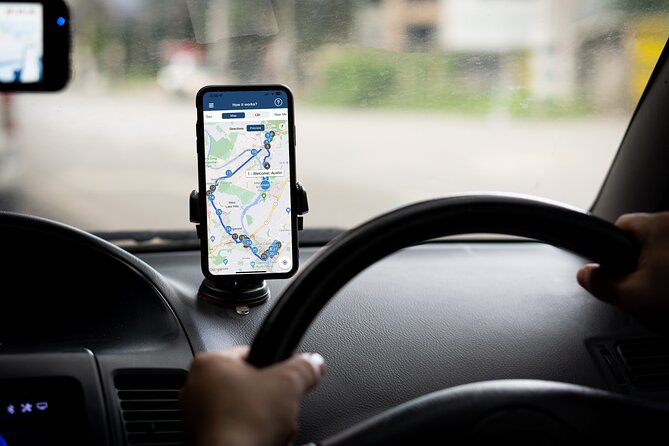
- GPS-triggered stories that play automatically as you move along the route
- Offline audio support after you download the tour on strong Wi‑Fi/cellular
- Stop mix that works for families: viewpoints, gardens, a spring pool, and classic theaters
- Free entry at every listed stop, so your cost goes mostly to the tour itself
- Buy once per car (up to 4 people), which is where the value really shows
How the Action’s Tour Guide app keeps you moving (even without signal)
This is a self-guided audio tour powered by a phone app called Action’s Tour Guide App. After booking, you’ll receive a password by email and text, plus setup instructions. The key practical detail: you must download the tour while you’re on strong Wi‑Fi or cellular. After that download, the audio is designed to work offline, so you won’t be stuck when you lose signal.
Once you’re onsite, open the audio tour app and start the version that matches your planned starting point and direction. Then you just follow the route. The narration is location-based, meaning it starts on its own when you arrive at each story point. That’s the big “wow” factor: you spend less time tapping screens and more time watching for parking spots, photos, and interesting street corners.
If you’re using your phone during driving segments, the app also supports connecting audio to your car stereo via Bluetooth, USB, or AUX. For walking moments, headphones can make it easier to hear clearly without competing with traffic.
You can also read our reviews of more walking tours in Austin



Price and logistics: $16.99 per car for up to four people

The price is $16.99 per group (up to 4), not per person. For families, that’s a big deal because you only need to buy one tour for the car. Even for a couple, it can be less expensive than booking a separate guided tour or paying per ticket for multiple “paid add-ons.”
Do keep your expectations realistic on time. The tour summary says about 1 to 2 hours, but there’s also a note that the full route is over 19 miles with more than 20 audio stories, and can take 3 to 4 hours if you do it at a relaxed pace. Translation: you’ll go longer if you actually listen to every story and pause for viewpoints, photos, and breaks.
Start at Mount Bonnell, end on Congress Ave: a route built for a slow roll

Your tour starts at 3800 Mt Bonnell Rd, Austin, TX 78731 and ends on Congress Ave., Austin, TX 78701. It runs daily from 6:00 AM to 9:00 PM. Since the stops include river overlooks and garden grounds, I’d plan for daylight if you can. Even with great audio, some of the “take it in” moments feel best when you can really see them.
One more logistics point: there’s no staff waiting at the start. You’ll start the first story on your phone and let the audio guide you from there. The route is designed so you can pause and restart whenever you want, which is handy when you want a snack break, a longer look, or to step out briefly without losing your place.
Stop 1: Bull Creek District Park and why Austin is tied to the Colorado River
The first story point is Bull Creek District Park. The theme here is Austin’s location along the Colorado River, and how that water shaped the area into something greener than you’d expect in a harder climate. It’s a good opening because it sets context before you hit the famous views and the downtown landmarks.
What you’ll likely enjoy most at this start: the sense that Austin grew around water and shade, not just concrete and signs. It also helps you understand why later river panoramas feel like more than pretty scenery.
Stop 2: Pennybacker Bridge Overlook and the Austin 360 Bridge views
Next up is Pennybacker Bridge Overlook—often called the “360 Bridge” by locals. This is one of those places where the story and the view work together. The audio helps you look beyond the immediate sightline, so you notice how the river and the surrounding terrain fit together.
Practical tip: plan on taking a slow walk at your own pace here. Even if the audio story is short, you’ll probably want a minute to park, step out, and let the panorama do its job.
You can also read our reviews of more guided tours in Austin





Stop 3: Wild Basin Preserve trails, plus the weekend fee detail
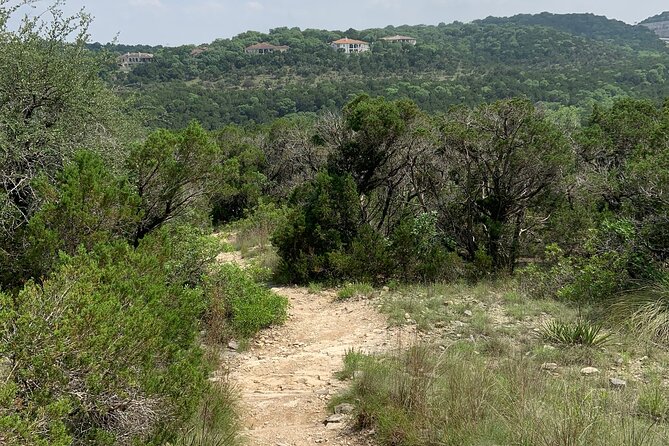
Then you move to Wild Basin Wilderness Preserve, described as over 200 acres of preserved wilderness with three miles of hiking trails. This is the stop that adds a more natural feel compared with the river-overlook and downtown landmarks.
There’s one cost consideration built into the stop: the preserve has a small fee on weekends and holidays, but it’s free and open during weekdays. Since the audio tour doesn’t include attraction entry or passes, you’ll want to plan your timing if you care about cost. If you’re visiting on a weekend, expect you may pay to enter or access parts of the preserve area.
Stop 4: Zilker Botanical Garden’s 28 acres, succulents, and a Japanese garden
After the preserve, you’ll come to Zilker Botanical Garden—about 28 acres of local and exotic plant life. The audio calls out a few specific things to look for: native succulents, prehistoric plants, and even a Japanese garden.
This is a smart stop for everyone in the car because it gives you a structured place to wander without needing to be an expert. If you want a break from parking-and-driving, garden paths usually make a self-guided audio tour feel calmer and more “strollable.”
If you’re with kids, this also tends to work well: botanical gardens are easier to handle than long hiking, and you can stop whenever the mood hits.
Stop 5: Barton Springs, the spring-fed pool, and kid-friendly extras

Then comes one of Austin’s best-known leisure spots: Barton Springs. The audio frames it as a three-acre, spring-fed pool that locals love, but it also points out extras that make it more than a place to swim.
The story mentions a miniature train for kids and a community theater that puts on free shows for the public. That means even if you’re not planning to get in the water, the stop can still be fun and active.
Practical consideration: this is also one of those places where your timing matters. If the pool area is busy, you may spend more time finding the right spot to listen and enjoy the grounds.
Stop 6: Paramount Theatre on the big sign side of downtown
As you transition to downtown, the tour brings you to Paramount Theatre—marked by the famous Paramount sign. The landmark is over 100 years old, and the audio notes it started in 1915 when architect John Eberson designed what was originally called The Majestic.
This stop is where the tour shifts from “look and listen” to “place and story.” It helps you read the downtown streets differently, because you’re not just seeing a theater—you’re learning why that theater exists where it does.
Stop 7: Angelina Eberly Statue and Austin’s 1842 tension
The final stop is the Angelina Eberly Statue. The story set-up is bold and dramatic: in 1842, Austin was technically the capital of Texas, but it was still a frontier town that felt at risk of being seized by Mexico.
You’ll get more from this ending if you’ve been paying attention to the way the tour has been building themes: water, land, preservation, and then finally the politics and pressure that shaped the city.
It’s a strong closer because it lands the emotional reason Austin’s identity formed the way it did—not just the scenic postcard version.
The biggest “make or break” factor: following audio cues in real traffic
The idea here is simple: you follow the route, and the audio plays automatically at each point. The friction comes when you’re in areas with complex intersections, construction, or lots of downtown movement.
One recurring issue is that turn guidance can be confusing when the environment gets busy—especially around downtown near major landmarks. My advice is straightforward:
- When you’re unsure you’re at the next story point, pause and confirm your location before you commit to a turn.
- If the audio starts feeling like it’s stacking too many details at once while you’re still in motion, pull over briefly so you can actually listen. That pause can save you from missing the best parts of the narration.
This isn’t a “set it and forget it” tour in the densest parts of downtown. Treat it like a road trip with short stops, not like a turn-by-turn driverless system.
Compatibility and phone needs: iPhone and Android requirements matter
For best results, you want a device that fits the stated requirements: iPhones running iOS 13 or newer and Android devices version 9 or newer. If you’re using an iPad or tablet, only models with GPS and cellular connectivity are recommended for navigation.
If you’re planning to play audio through your car, remember the phone-to-stereo setup options: Bluetooth, USB, or AUX. CarPlay is supported for audio compatibility, and Android Auto is on the way, so if you’re strict about using Android Auto right now, check that your setup matches what’s available.
Who this tour fits best (and when to skip it)
This Austin audio tour is ideal if you want:
- A self-paced route with a start and end you can handle in one day
- A family-friendly plan where you can buy one tour for everyone in the car
- A mix of river views, gardens, and classic downtown architecture without paying for separate paid attractions
- A low-stress way to learn Austin’s story while driving and walking
It may be less ideal if you hate any chance of missed turn cues. If you prefer strictly guided, step-by-step navigation with staff support, this type of app-driven audio route might frustrate you in dense areas.
Should you book this Austin self-guided audio tour?
If your goal is to see Austin’s highlights from Mount Bonnell to Congress Ave and you like learning through short, well-placed stories, I think this is a solid buy. The offline-ready audio, the hands-free GPS triggering, and the up-to-four-per-car pricing make it easy to justify.
Book it if you’re comfortable driving your own route, willing to pause briefly for clarity, and you want mostly free stops with a guided voice connecting them. Skip it if you strongly need flawless turn-by-turn guidance in downtown or you can’t stand the idea of pulling over when you’re unsure.