REVIEW · AUSTIN
Downtown Austin Music Walking Tour
Book on Viator →Operated by YourBikerGang.com · Bookable on Viator
Music in Austin hits fast. In this downtown walking tour, you follow the city’s sound from the Moody Theater area to the late-night blocks where bands still earn their keep. I love how the tour connects names and locations to the way the music scene actually shifted over time—so it’s not just sightseeing, it’s a timeline you can walk.
I also liked the human scale: the group maxes at 18, so the guide can keep the pace comfortable and still answer questions. If you’re lucky, you’ll get a guide like Vic—friendly, engaging, and able to explain the Austin scene with clarity, even when he had a tiny group on a hot Friday.
One consideration: this is a mostly outdoors walk and it needs good weather. If the heat or rain is rough, you’ll want solid shoes, water, and a flexible mindset about slowing down.
In This Review
- Key highlights worth planning for
- Why Austin’s music story works best on foot
- Price and timing: $34.99 for a guided downtown music map
- Finding the group: Austin Rocks to your Stubb’s finish
- Moody Theater: where Austin City Limits sets the tone
- Congress Avenue: from red-light district to today’s corridor
- 6th Street and Dirty 6th: live music energy with SXSW context
- Stubb’s Bar-B-Q finish: music venue meets Red River history
- The guide experience: how Vic’s style improved the whole walk
- Weather and walking reality: what can make or break the day
- Who should book this Austin music walking tour
- Should you book Downtown Austin Music Walking Tour?
- FAQ
- Where does the tour start and end?
- How long is the downtown Austin music walking tour?
- What is the price per person?
- What time does the tour begin?
- Is there a guide included?
- Is admission included at the stops?
- What group size should I expect?
- Is the tour ticket mobile?
- What happens if the weather is poor?
Key highlights worth planning for

- A tight 1 hour 40 minutes to 2 hours loop through downtown, not a half-day slog
- Moody Theater start with context about Austin City Limits and the scene’s growth
- Congress Avenue stop that explains how a once-seedy area became a business and music corridor
- 6th Street segment focused on Dirty 6th and how live music changed alongside SXSW and festivals
- End at Stubb’s Bar-B-Q in the Red River Cultural District, plus built-in time to check out the venue area
- Small group up to 18 for a better listening experience on crowded streets
Why Austin’s music story works best on foot
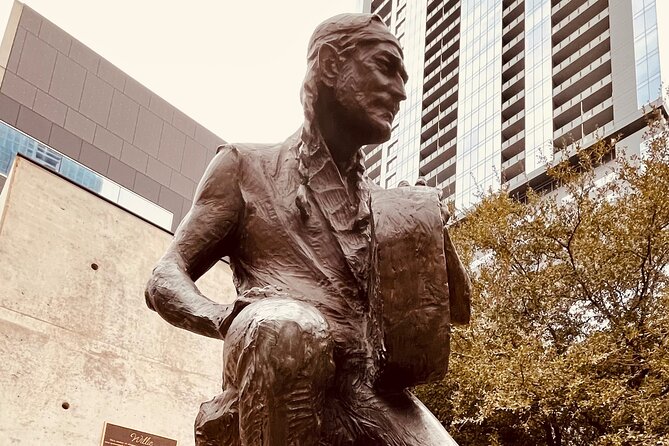
Austin music is one of those things where the geography matters. The venues are close enough that you can jump neighborhoods by turning a corner, but far enough apart that each block feels like a different chapter. This tour uses that advantage. You’re not just told about the city—you walk through the places that shaped its sound.
The pacing also helps. You’re scheduled for short focused stops, then moves that keep the energy up. That means you’ll understand the “why” behind Austin’s reputation without spending hours in transit or waiting around.
And because the tour is guided, you’re spared the hardest part of planning: figuring out which sites actually connect to the bigger story. The route gives you that framework fast.
You can also read our reviews of more walking tours in Austin


Price and timing: $34.99 for a guided downtown music map
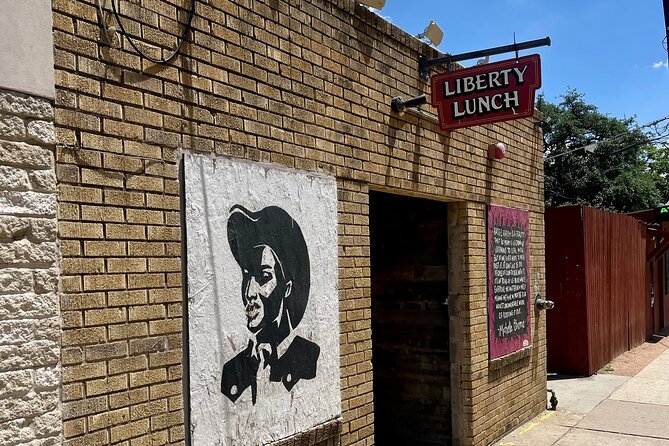
At $34.99 per person, this isn’t a budget-freebie, but it also isn’t a big-ticket experience. For me, the value comes from two things you can feel immediately: a guide who ties locations to changes in Austin’s music culture, and a route that stays compact so you’re not paying for a long ride.
Plan for 1 hour 40 minutes to 2 hours total. That’s long enough to cover multiple key areas (Moody Theater area, Congress Avenue, 6th Street, and the Stubb’s area), but short enough that you can still do dinner afterward.
Start time is 11:00 am, which is smart for getting the day going. Also note that it’s typically booked about 21 days in advance, so if your trip dates are fixed, I’d lock in early rather than gambling on availability.
Mobile ticket plus a small group helps you stay efficient. You won’t be wandering around looking for a paper pass.
Finding the group: Austin Rocks to your Stubb’s finish
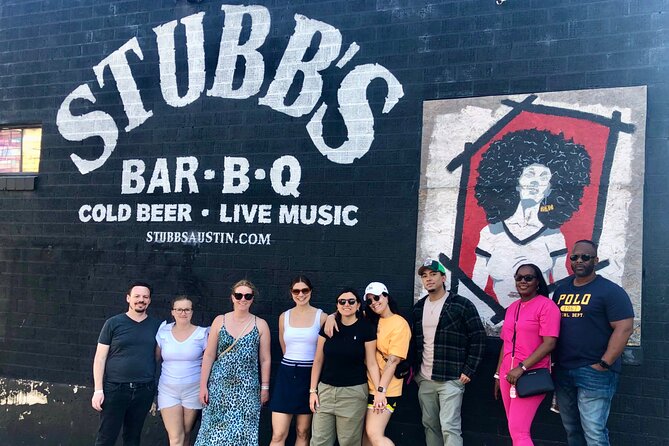
You start at Austin Rocks, 301 W 2nd St, Austin, TX 78701. That’s a practical meeting point in the downtown core, close enough that you can usually reach it without complicated transfers.
The tour ends at Stubb’s Bar-B-Q, 801 Red River St, Austin, TX 78701. Finishing there is more than convenience. You end in the exact kind of music-and-food atmosphere that Austin does well—one that makes it easy to keep the vibe going after the tour.
If you’re using public transportation, the tour is described as near public transit, so it should fit into a normal day of walking and transit. Service animals are allowed, and most travelers can participate, so you’re not signing up for something ultra-specific.
My practical tip: wear shoes you can walk in for two hours on sidewalks that can get busy around the nightlife corridors.
Moody Theater: where Austin City Limits sets the tone
The tour begins outside the Moody Theater, with the key idea that it’s home of Austin City Limits. Even if you’re not a TV superfan, the point matters: this venue is part of how Austin’s identity moved from local scene to worldwide recognition.
This first stop is about 15 minutes, and it’s structured to give you the big picture before you start threading through the downtown blocks. You’ll talk history of Austin’s music scene right at the start, then you begin walking past some famous and infamous music venues.
What I like about starting here is that it acts like a “camera zoom out.” Later stops get more specific. Early on, you get orientation: how the music scene grew, who benefited from the city’s momentum, and why Austin earned its Music Capital of the World reputation.
Congress Avenue: from red-light district to today’s corridor
From there, you move along Congress Avenue for about 20 minutes, and this section gives the kind of context that makes the rest of downtown make sense.
You’ll learn how this area shifted: how music helped transform a once red-light district into a corridor with hotels, shops, and everyday business traffic. That matters because it explains a common pattern in Austin: culture draws people in, and when people stay, the city changes around the scene.
This stop is short, so don’t expect a lecture that turns into a book. Think of it as a “why the blocks feel the way they do” explanation.
Drawback to consider: if you’re primarily hunting for a classic bar-crawl vibe, this part can feel more historical than nightlife. It’s still important, but it’s not trying to be the most party-forward segment.





6th Street and Dirty 6th: live music energy with SXSW context

The most time on the schedule goes to 6th Street, with about 45 minutes. This is the tour’s heart for atmosphere.
You’ll stroll Austin’s bar district and hear about what’s been known as Dirty 6th—the era and attitude tied to the street’s identity as a place where musicians play nightly in bars and venues.
Here’s what I’d call the practical win: you’re not just hearing facts about locations. You’re being told how live music altered the bar district over decades, and how that momentum expanded further with SXSW and other festivals.
So even if you don’t care about every festival detail, you’ll understand the cause-and-effect:
- regular live music builds a reputation
- that reputation creates draw
- festivals amplify the audience
- and then venues and street culture adapt
One note: 6th Street can be crowded and loud, so it helps if you’re comfortable walking through busy sidewalks and keeping pace. If you prefer quiet, this section might feel like the most intense part of the tour.
But if you want to see where Austin’s “go out and hear something tonight” myth comes from, this is the part that makes it real.
Stubb’s Bar-B-Q finish: music venue meets Red River history
The tour ends at Stubb’s Bar-B-Q after about 30 minutes focused on the Red River area and music legacy.
Stubb’s is both a famous music venue and a historic BBQ stop, so it’s the kind of ending that blends Austin’s two major passions: bands and food. You’ll also hear about the Red River Cultural District and how big-name artists made their mark here.
What you can do with that time is your choice. The format is “end at the venue,” not “you must eat.” But it’s easy to keep going. The info suggests you can stop in for BBQ or head across the street to Pelon’s for a margarita after the tour.
If you’re planning dinner afterward, this is a great landing spot. If you’d rather pace yourself, use the end time to look around the venue area, get photos, and decide if you want a meal or just the atmosphere.
The guide experience: how Vic’s style improved the whole walk
The guide is the product here, and the reviews you’re likely to hear about it boil down to one thing: the guiding feels personal and alive.
I found that the best music tours don’t recite dates. They connect the dots—why the city behaved the way it did, and how musicians fit into that.
On this tour, the guide angle is exactly that. The tour is designed so that by the time you reach the bar district, you understand the history that created it. A guide like Vic (mentioned by name) can pull that off in a way that feels friendly, not formal.
A big clue from his performance: when he had a very small group on a hot Friday, he still managed to make the tour fun and keep the explanations moving. That tells you something important. Even if your group is small, you’re not stuck in an awkward “just you and the guide” script. You still get a coherent story and an overview.
My advice for getting more out of it:
- ask quick questions when you’re at the stop with the right context
- mention what kind of music you like, so the guide can point you to relevant eras
- bring water, especially because part of the experience is a walking schedule through daytime streets
Weather and walking reality: what can make or break the day
This activity needs good weather. That’s not just small print. Your comfort determines how much you enjoy the tour, because you’re moving along downtown streets for nearly two hours.
On hot days, the pace can feel tougher if you don’t slow down and hydrate. The tour’s length is manageable, but it still adds up when you’re in sun and near busier sidewalks.
So plan like this:
- comfortable shoes (non-negotiable)
- sun protection
- a water bottle
- a light layer if you swing between sunny and shaded blocks
If it rains, expect your day to change. The tour notes that if it’s canceled due to poor weather, you’ll be offered a different date or a full refund, so you have options.
Who should book this Austin music walking tour
This tour is a strong pick if you:
- want a first-timer-friendly Austin music orientation
- like history tied directly to places you can see
- enjoy the idea of walking through the bar district with context, not just a map
- appreciate a guide who can explain how Austin changed over time, not only where the venues are
It’s also a good option if you’re on a tight schedule. Two hours is a sweet spot: enough time for multiple neighborhoods, not so much time that it steals your whole day.
Who might not love it: if you hate walking in crowds or you’re expecting a long sit-down experience with major venue access, this won’t feel like that. It’s a downtown stroll with stops and explanations, ending at a famous venue area.
Should you book Downtown Austin Music Walking Tour?
If you want an efficient, guided route that connects Moody Theater, Congress Avenue, 6th Street, and Stubb’s into one clear Austin music story, I’d book it. The price makes sense for a guided two-hour walk with a small group, and the route order helps you build understanding as you go.
I’d especially recommend it to you if you’re the type who likes to hear why a city got famous—not just where to take photos. The guided storytelling is the difference between a random walk and an actually useful one.
If you’re traveling during heat season, go in prepared. And if the forecast looks rough, keep an eye on weather so you don’t waste energy on streets when you’d rather be exploring in comfort.
FAQ
Where does the tour start and end?
The tour starts at Austin Rocks, 301 W 2nd St, Austin, TX 78701 and ends at Stubb’s Bar-B-Q, 801 Red River St, Austin, TX 78701.
How long is the downtown Austin music walking tour?
It runs about 1 hour 40 minutes to 2 hours.
What is the price per person?
The price is $34.99 per person.
What time does the tour begin?
The start time is 11:00 am.
Is there a guide included?
Yes, a tour guide is included.
Is admission included at the stops?
Moody Theater and Congress Avenue are listed with free admission. 6th Street and Stubb’s Bar-B-Q have admission ticket included.
What group size should I expect?
The tour has a maximum of 18 travelers.
Is the tour ticket mobile?
Yes, the tour uses a mobile ticket.
What happens if the weather is poor?
The experience requires good weather. If it’s canceled due to poor weather, you’ll be offered a different date or a full refund.