REVIEW · AUSTIN
Gunfights & Grifters: A Historical Walk on the Wild Side
Book on Viator →Operated by Nitty Gritty City Tours of Austin · Bookable on Viator
Austin has a darker side to walk.
This Gunfights & Grifters Downtown Austin History Sandal and Vice walking tour takes you off the usual “top sights” loop and into bribery, gunfights, and the city’s Red Light era. I love the way a guided route keeps things efficient—about 1 hour 30 minutes to 2 hours with a clear sequence of stops—and I also love the storytelling strength (especially when the guide is Emily, as noted in multiple past runs). The main drawback to consider is that the themes are adult and sometimes grim, including a serial killer and stories tied to prostitution and political corruption.
You’ll get a stress-free experience with an easy meeting spot and a mobile ticket, plus a small group size (maximum 20). Admission at the stops is listed as free, so the $48 price feels more like a guided “package” than you paying again and again once you’re in the city. You’ll also want to plan for walking between sites and bring your own water, since it’s not included.
In This Review
- Key things that make this walk worth your time
- Why this scandal-forward Austin walk feels different
- Tour pace, price value, and what you should know up front
- Walking route: from 11th Street start to Halcyon finish
- Texas State Capitol: The year they threw the rascals out
- Texas Governor’s Mansion: A piggy bank in plain sight
- Littlefield Building: Austin’s outlaw myth that lived on
- The Driskill: quack doctors, murder, gunfights, and early desegregation
- Midnight Cowboy Modeling: the clue in an unmarked door
- O. Henry House Museum: the moral stories and the messy Austin years
- 327 Congress Ave, suite 100: Austin’s 1885 serial killer ripple effect
- Halcyon (Madam’s Row): the Red Light district era ends the walk
- Tips to make the most of the walk (and not get caught off guard)
- Should you book this Gunfights & Grifters tour?
- FAQ
- How much is the tour?
- How long does the walk take?
- Where do I meet the tour, and where does it end?
- Is the ticket mobile?
- Do I pay admission at the stops?
- Is drinking water included?
- Are service animals allowed?
- What is the cancellation refund window?
Key things that make this walk worth your time
- Scandal-first Austin: bribery, vigilantes, and the Red Light district are the focus, not just the highlights.
- Small group pace: up to 20 people keeps the experience controlled and guide-led.
- Multiple free-stop admissions: several stops are marked as admission ticket free.
- Strong storytelling reputation: Emily is repeatedly praised for research and engaging delivery.
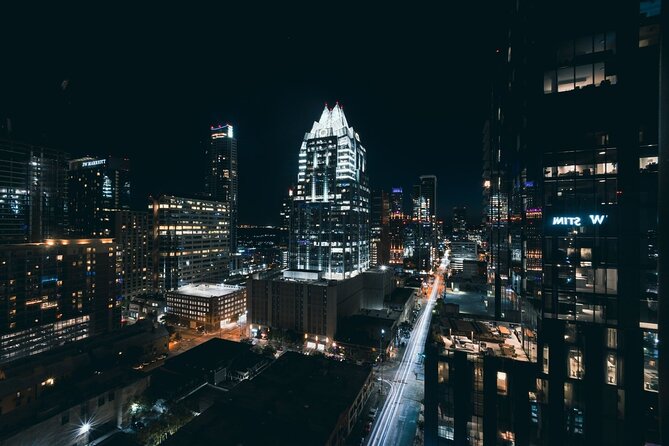
- Walkable downtown arc: you connect landmark buildings and smaller street clues in a compact route.
Why this scandal-forward Austin walk feels different
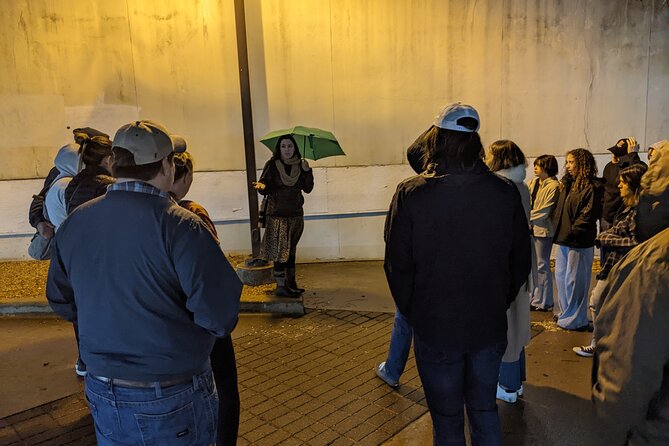
Most Austin history tours help you admire the city’s architecture and repeat the same well-known talking points. This one does the opposite. Instead of treating Downtown Austin like a museum display, it treats it like a lived-in place where power was bought, violence was real, and the “official” story often covered up the messier truth.
That’s why I think it’s such a good choice if you like history that has sharp edges. You’re not just hearing what happened—you’re looking at the very same addresses that still sit on the streets. Even when you only spend 5 to 20 minutes per stop, the guide connects the details so it doesn’t feel like random trivia.
The other reason it works is the tone. It’s not sensational for the sake of it. The stories are scandal-heavy, yes, but they’re also anchored to specific locations: the Texas State Capitol, the Texas Governor’s Mansion, the Driskill Hotel, and the long-gone world of Madam’s Row. You get a sense of how Austin’s social life and political life tangled together, long before the modern version of Downtown took shape.
You can also read our reviews of more walking tours in Austin


Tour pace, price value, and what you should know up front
At $48, you’re paying for a guided walking experience (about 1.5–2 hours) with all fees and taxes included. That’s a strong value for Downtown Austin, where tours can quietly add on site fees. Here, the stops are marked with free admission tickets, so you’re not stuck doing surprise math mid-walk.
The tour is designed to cover a lot without exhausting you. The itinerary keeps you moving, but it’s not sprinting between far-flung neighborhoods. You’ll also be walking enough that “moderate physical fitness level” makes sense as a simple reality check—comfortable shoes are more important than packing anything fancy.
Two practical notes that matter:
- Drinking water is not included, so bring a bottle, especially in warm weather.
- You’ll need decent conditions since the experience requires good weather.
Walking route: from 11th Street start to Halcyon finish
The tour starts at 100 1/2 W 11th St, Austin, TX 78701 at 10:00 am. The endpoint is at the corner of 4th and Lavaca, outside Halcyon Coffeehouse & Bar (Halcyon is listed at 218 W 4th St).
This “begin near the Capitol area, finish near 4th and Lavaca” layout is useful for two reasons. First, it keeps the walk feeling like a single downtown loop rather than a zigzag. Second, your finish is in a spot where you can naturally keep the evening going—coffee, a casual meal, and easy access to more Downtown exploring.
Texas State Capitol: The year they threw the rascals out
Your first stop is the Texas State Capitol, with about 15 minutes to orient you and get into the biggest political mess on the route. The story centers on an explosive bribery scandal and an election described as The year they threw the rascals out.
Why this matters: it sets the theme for the entire walk. Austin’s later reputations—its Wild West side, its vice economy, its underworld connections—make more sense when you start with politics. When officials can be swayed, enforcement can be bent, and the city’s “public face” can diverge hard from what’s happening behind the scenes.
Practical tip: at the Capitol, stand where your guide can point out the relevant building details. Even if you’ve seen the Capitol photos a hundred times, the point here is to learn how people in the 1800s and early 1900s understood power and leverage.
Texas Governor’s Mansion: A piggy bank in plain sight
Next is the Texas Governor’s Mansion for another 15 minutes, focused on a husband-and-wife story where the Governor’s office gets treated like a personal piggy bank. The guide’s theme here is straightforward: scandal wasn’t limited to street criminals—high-ranking power could be complicit.
This stop also adds a different kind of texture. The Capitol story is about political theater and influence. The Mansion story is about access—who had it, how it was used, and why people let it happen. You start seeing the same pattern repeated across different “levels” of Austin society.
If you’re taking photos, take them, but don’t let that replace listening. This is one of those stops where the details don’t stay valuable unless you catch the story beats.
You can also read our reviews of more historical tours in Austin

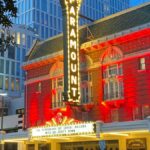

Littlefield Building: Austin’s outlaw myth that lived on
At the Littlefield Building, you get 10 minutes on a local legend tied to gunfighting, gambling, and an outlaw vigilante figure—described as a myth and legend even during his own lifetime.
This is the point where the walk turns from “politics and corruption” into “violence and frontier storytelling.” Even without adding extra facts beyond what the guide explains, the stop helps you grasp how Austin built its legends. People love to hear the origin of a good outlaw tale because it tells you how a city romanticized danger while trying to control it.
Practical angle: this stop is short, so don’t plan to linger. Use the time to pick up what makes the story feel unique to Austin—how the idea of a vigilante worked in a place trying to define itself.
The Driskill: quack doctors, murder, gunfights, and early desegregation
Your longest stop is the Driskill Hotel at 20 minutes, and it’s also the most layered. The tour frames Driskill’s past as scandal—quack doctors, murderous sex workers, assassination attempts, lobby gunfights—and it also points to early desegregation as part of the broader story. You’ll go inside, which changes the feel from “standing outside and hearing history” to being in a space where history has to echo off the walls.
I like this stop because it proves a point: vice and violence weren’t confined to back alleys. They showed up in the buildings people visited for status, business, and prestige. A hotel lobby isn’t neutral ground. In a city with a strong nightlife culture, the guest experience and the underworld story can overlap.
Drawback to consider: because the Driskill section includes especially dark subject matter, it may not be your best pick if you want strictly light history. But if you’re here for the full “wild side” framing, this is exactly the kind of stop that delivers.
Midnight Cowboy Modeling: the clue in an unmarked door
At Midnight Cowboy Modeling you spend about 5 minutes on something easy to miss: an unmarked door on 6th Street.
This is where the tour gets fun in a different way. You’re not getting a long lesson or a courtroom-level scandal. You’re learning how cities hide stories in plain sight—signs disappear, doors stay unmarked, and the urban memory depends on people who know where to look.
Even in just a few minutes, this stop helps you train your attention for the rest of Downtown. You’ll start spotting street-level details you might otherwise walk right past.
O. Henry House Museum: the moral stories and the messy Austin years
Next is the O. Henry House Museum for about 10 minutes. The guide sets up O. Henry as a world-famous author known for short stories that feel wholesome and moralistic. Then the twist lands after his death, when people uncover the truth about the 10 years he spent in Austin before his later fame.
What I like about this stop is how it changes the tone of “scandal.” The first part of the walk leans political and violent. This section leans psychological and narrative—how an image of a person can be cleaned up by the stories people tell about them, not necessarily by what actually happened.
If you like literature, this stop will give you an anchor for the city’s transformation: Austin as a place that shaped a writer before the world saw him a different way. If you’re not into literature, you’ll still appreciate how the guide uses a recognizable name to point toward a less-known Austin chapter.
327 Congress Ave, suite 100: Austin’s 1885 serial killer ripple effect
At 327 Congress Ave. suite 100, you get another 10 minutes on an 1885 serial killer. The guide connects the murders to an explosion of scandals involving politicians, police, madams, and dangerous racial prejudice.
This stop is the most chilling on the route because it ties together violence and systems—law enforcement, political power, and social exploitation. It also explains why a single crime can reshape public trust. When investigations collide with prejudice and corruption, the scandal spreads outward fast.
Practical note: this is another quick stop. Listen for how the guide ties the location to the political and social fallout, not just the crime itself. The value here is understanding the broader consequences.
Halcyon (Madam’s Row): the Red Light district era ends the walk
Your final stop is Halcyon, tied to Austin’s Red Light District that thrived from 1871 to 1913. The tour visits what was once known as Madam’s Row and talks about the three wealthiest and most notorious women of Austin’s golden age.
This ending works because it brings the theme full circle. Earlier stops show political corruption and frontier legend-making. Here, you see the city’s vice economy as organized and influential enough to produce its own power structure. Ending at Halcyon also feels fitting: you’re finishing where the modern address still sits close to the historic “madam” world.
I especially like that the guide frames these women as part of a broader Austin era rather than isolated characters. It helps you understand how money, social status, and vice could intersect—then fade once the city changed.
Tips to make the most of the walk (and not get caught off guard)
Here’s how to get the best value out of a 1.5–2 hour Downtown history walk like this one:
- Bring water. Drinking water isn’t included, and you’ll be outside walking.
- Wear comfortable shoes. The route is compact, but you’re still covering multiple stops.
- Go in with an open mind about adult themes. The tour includes sex-related and violence-related content as part of the historical record.
- Listen for connections. The strongest moments aren’t one-off facts. The guide keeps linking politics, enforcement, and vice.
- If the guide is Emily, lean into the storytelling. The praise for her research and delivery shows up repeatedly, and you’ll feel it when she ties the addresses together.
Should you book this Gunfights & Grifters tour?
Book it if you want a Downtown Austin history walk that goes beyond postcards and “nice stories only.” This one is built for people who enjoy sharp detail and real scandal—bribery at the Capitol, power misuse at the Governor’s Mansion, outlaw legend at the Littlefield Building, and the Driskill’s unsettling mix of glamor and violence. The $48 price also holds up because you get a guide and free admission at the listed stops, with a small group size keeping it personal.
Skip it (or at least think twice) if you’re looking for a gentle, purely uplifting history experience. This route includes heavy material like a serial killer and stories tied to prostitution and prejudice. Also bring your own water, and plan around walking.
If you like your history with facts tied to specific addresses, this is exactly the kind of tour you’ll talk about after the last stop at Halcyon.
FAQ
How much is the tour?
The tour costs $48.
How long does the walk take?
It runs about 1 hour 30 minutes to 2 hours.
Where do I meet the tour, and where does it end?
You meet at 100 1/2 W 11th St, Austin, TX 78701. The tour ends at the corner of 4th and Lavaca, outside Halcyon Coffeehouse & Bar.
Is the ticket mobile?
Yes, the tour uses a mobile ticket.
Do I pay admission at the stops?
No. The listed stops include admission ticket free.
Is drinking water included?
No. Drinking water is not included.
Are service animals allowed?
Yes, service animals are allowed.
What is the cancellation refund window?
You can cancel for a full refund if you cancel up to 24 hours in advance. If you cancel less than 24 hours before the start time, you won’t get a refund.